What Is an Aluminum Extrusion Die and How Does It Work?
An Aluminum Extrusion Die is a shaped tool that guides heated aluminum through an opening to create a continuous profile. The opening determines the profile’s basic cross-section, from a simple flat bar to a channel with several features. A press pushes a billet through the die, and the emerging metal takes its shape. The process looks direct. The design is not.
Inside the die, carefully shaped passages and bearing surfaces help control how quickly aluminum flows through different parts of the opening. That balance matters: uneven flow can contribute to twisting, uneven walls, or dimensions that drift from the target. For hollow profiles, features such as mandrels and bridges help form the internal spaces. Die materials, profile geometry, billet temperature, and press conditions all influence performance, so no single design suits every job.
Small details count. A narrow slot, a sharp corner, or a slight change in wall thickness can affect metal flow and tool life. Even a well-designed die may need adjustment after trials; that is a practical reality, not necessarily a design failure. This guide explains the die’s main parts, how it works during extrusion, and what manufacturers consider when developing a profile. Understanding the basics makes drawings and production discussions easier to follow. It also helps set realistic expectations: the die shapes the metal, but process control helps determine whether the finished profile meets its dimensional and surface requirements.
What an Aluminum Extrusion Die Is
What Is an Aluminum Extrusion Die and How Does It Work?
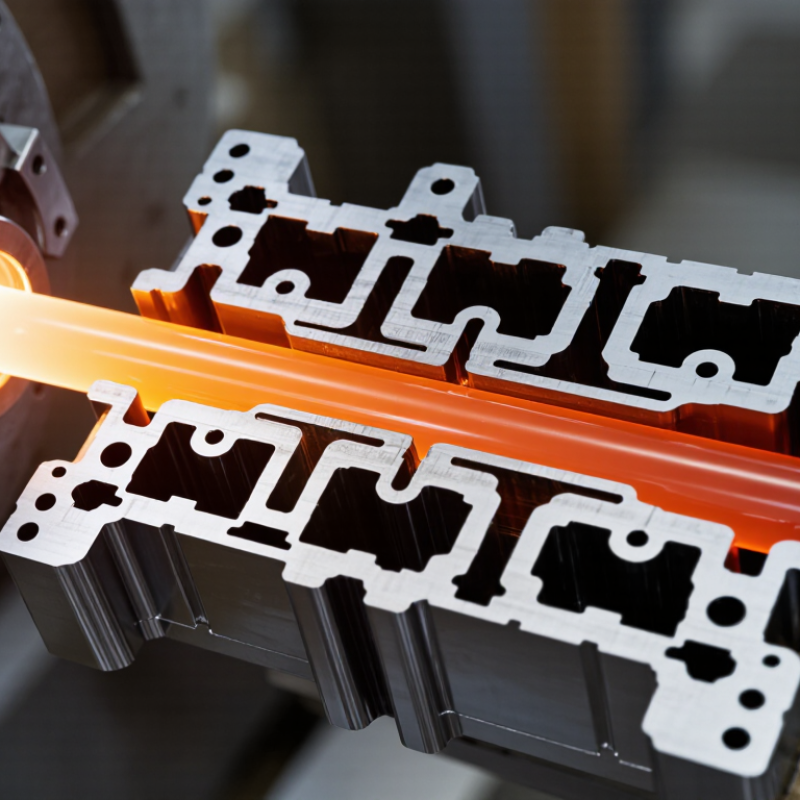
An aluminum Extrusion Die is a precision steel tool that shapes heated aluminum into a continuous profile. Its opening creates the profile’s cross-section. A solid die forms simple sections, such as bars or angles. A hollow die uses bridges and a mandrel to create tubes, channels, or complex frames.
During extrusion, a heated billet enters the container. A hydraulic ram pushes the billet through the die opening. Aluminum flows around the die’s bearing surfaces before emerging as a long profile. The bearing controls metal flow and final dimensions. Cooling, stretching, and cutting follow the exit. The USGS Mineral Commodity Summaries 2024 reported approximately 70 million metric tons of global aluminum production in 2023. That scale makes die accuracy commercially important, not merely technical. The International Aluminium Institute reports that recycled aluminum uses about 5% of the energy needed for primary aluminum. Efficient die design can help reduce remelting, scrap, and unnecessary processing.
Tips: Match the die design to the alloy, wall thickness, and profile complexity. Keep the bearing length balanced. A small imbalance can cause twisting or uneven walls. Inspect wear regularly.
The definition sounds simple. Real dies rarely behave perfectly. Temperature, friction, alloy chemistry, and press speed constantly interact. Even experienced engineers sometimes adjust a die after the first trial. That is not failure; it is practical process learning. Reported figures may vary by region and year, so production decisions should use current technical data and measured trial results.
The Main Components of an Extrusion Die
What Is an Aluminum Extrusion Die and How Does It Work?
The Main Components of an Extrusion Die
An extrusion die is a hardened steel tool that shapes heated aluminum as a press forces it through an opening. In a solid die, the opening forms the profile directly. Hollow profiles need a more complex porthole die, which splits the metal into streams before joining them under pressure. The Aluminum Extrusion Manual, published by The Aluminum Association, describes die preheating as part of setup; typical practice heats dies to roughly 400–500°C, depending on alloy and process. Temperature control matters. A cold die can disrupt metal flow and affect the finished profile.
The die plate contains the opening and bearing surfaces. Bearings are narrow lands that guide the aluminum and help balance flow across the profile. A feeder plate can distribute metal toward different regions, while a mandrel shapes internal cavities in hollow sections. Behind the die, a backer and bolster support the tooling under press load. Small differences in bearing length can change how quickly sections emerge, so die makers adjust them to reduce twisting or uneven walls. Real presses are less tidy than diagrams; trial runs sometimes reveal flow problems that calculations miss.
Tips: Inspect bearings for wear and buildup, and record die temperature before each run. A simple log can help connect process changes with profile defects.
How Die Design Shapes the Aluminum Profile
What Is an Aluminum Extrusion Die and How Does It Work?
How Die Design Shapes the Aluminum Profile
An extrusion die is a hardened steel tool that turns a heated aluminum billet into a continuous profile. Its opening sets the profile’s cross-section, but the shape alone does not determine the result. Die cavities and bearing surfaces guide metal flow, helping thin walls and thick sections emerge at a more even pace. A small imbalance can leave one leg longer, twist a channel, or make a hollow section difficult to hold within tolerance. The Aluminum Extruders Council’s Aluminum Extrusion Manual describes die design as a balance of metal flow, bearing length, and profile geometry. In practice, designers also consider alloy, billet temperature, and press conditions.
Look closely at a complex profile: a narrow slot beside a heavy flange creates uneven resistance. The die may need longer bearing surfaces near faster-flowing areas to slow the metal, while bridge and mandrel geometry support hollow shapes. These choices affect dimensional accuracy, surface quality, and how much material needs correction after pressing. The Aluminum Association’s Aluminum Standards and Data provides dimensional tolerance guidance; it makes clear that acceptable variation depends on profile dimensions and product conditions.
One useful sustainability measure is material yield. The International Aluminium Institute reports that recycled aluminum requires about 5% of the energy used for primary aluminum production. That figure concerns recycling, not die design, but it underscores why reducing rejected or heavily trimmed profiles matters.
A design can still miss its target. Trial runs and measurement often reveal what the drawing could not.
How Aluminum Moves Through the Die
An aluminum extrusion die is a shaped steel tool that turns a heated billet into a continuous profile. In a direct press, a ram pushes the billet through a container toward the die opening. The metal does not flow like water. Pressure forces it to deform and divide around supports inside the die, then reunite as it passes through the opening. That joining point matters: uneven flow can leave visible lines or weaken a hollow section.
Temperature and die design guide the movement. ASM Handbook, Volume 14A, describes hot extrusion as a process in which billet temperature, tool conditions, and deformation affect metal flow and product quality. In practice, operators monitor billet and die temperatures, press speed, and the emerging profile. A thin wall may exit faster than a thick one, so die openings and flow paths need careful balancing. It is not always perfect. A small temperature shift can change the surface finish or profile dimensions. The extruded length then travels along a runout table, where it is cooled and checked for straightness before cutting.
The Step-by-Step Extrusion Process
What Is an Aluminum Extrusion Die and How Does It Work?
The Step-by-Step Extrusion Process
A step-by-step extrusion process begins with heating an aluminum billet until it is soft enough to deform, but still solid. The billet is loaded into a press container, where a hydraulic ram pushes it toward the die. The die’s shaped opening determines the profile’s cross-section. It does not create every detail by itself; billet temperature, pressure, and die design all influence the result.
The aluminum flows through the die opening and emerges as a long, continuous shape. It can be surprisingly hot. Operators guide the new profile onto a runout table, then use fans or water cooling to bring it to a workable temperature. Once cooled, the profile is stretched to straighten minor twists and reduce internal stress. This step needs care: excessive stretching can distort thin walls.
A saw cuts the profile into specified lengths. Some products then undergo heat treatment to reach the required strength, followed by machining or surface finishing. Small variations can still occur, especially in complex profiles. That is why dimensions and surface condition are checked during production, not just at the end. A clean cut is useful, but it cannot fix a profile that left the die out of tolerance.