
7 Best Single Gauge Manifold Valves for Global Buyers?

Selecting the right Single Gauge Manifold requires more than comparing prices or connection sizes. Global buyers often evaluate pressure ratings, material compatibility, sealing performance, calibration access, and supplier traceability. A compact manifold may look efficient on a crowded instrument panel, yet a poorly chosen stem seal can create leakage, unstable readings, or difficult maintenance.

Industry evidence supports this careful approach. MarketsandMarkets identifies process instrumentation as a continuing investment area, driven by automation, energy efficiency, and stricter operational controls. Grand View Research also reports sustained growth in industrial valve demand, especially across chemical processing, oil and gas, water treatment, and power applications. These trends increase the need for dependable valve assemblies, not merely low-cost components.

Standards matter.

A professional comparison should consider ASME B16.34 pressure requirements, ISO 15848 leakage performance, and relevant ASTM material practices. Field experience adds another layer. Stainless steel 316 may suit many corrosive environments, but chloride exposure, temperature cycling, and fluid cleanliness can change the outcome. Thread quality, handle clearance, and visible identification also matter during real maintenance work.

This guide reviews seven Single Gauge Manifold valves for international purchasing decisions. Each option is assessed through practical criteria, including construction, pressure capability, installation design, documentation, and service support. Manufacturer claims should still be verified against test certificates and project specifications. No ranking fits every plant. That limitation deserves attention. A valve that performs well on a clean nitrogen panel may fail expectations in a vibrating, humid, or chemically aggressive installation. Reliable selection combines published data with application-specific engineering judgment.
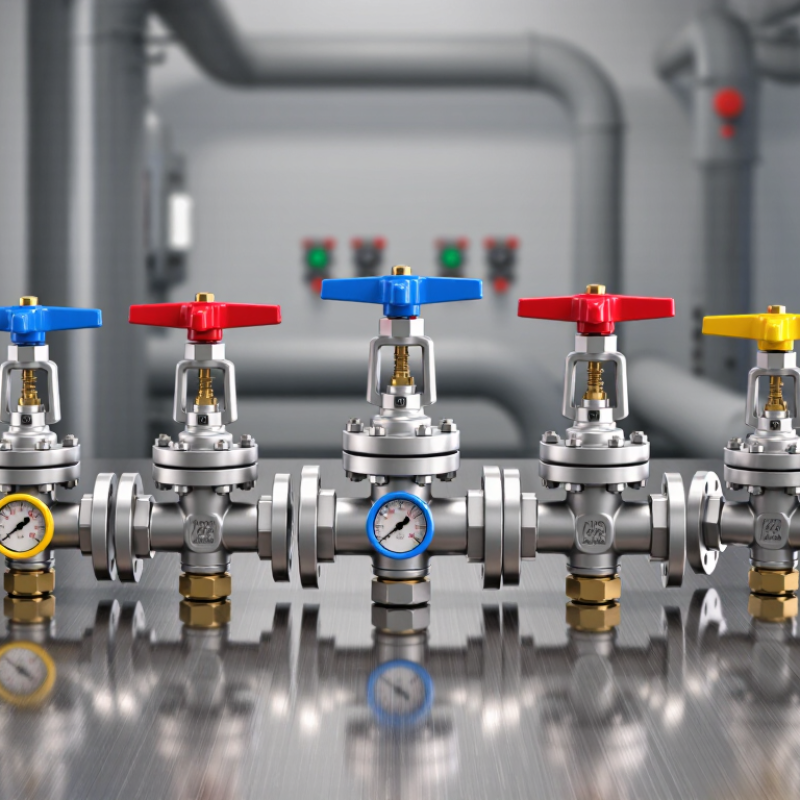
7 Best Single Gauge Manifold Valves for Global Buyers?

What a Single Gauge Manifold Valve Is and How It Works

What a Single Gauge Manifold Valve Is and How It Works

A single gauge manifold valve combines one pressure gauge with a controlled refrigerant passage. It is commonly used during charging, recovery, pressure testing, and evacuation. The gauge displays system pressure, while the valve opens or restricts refrigerant flow through the service hose. A technician connects the hose to a service port, checks the reading, and adjusts the valve gradually.

The gauge may show psi, bar, or another selected unit. This detail matters for global buyers. A pressure reading alone does not confirm correct charge; ambient temperature and refrigerant type also affect interpretation. The IEA’s The Future of Cooling report states that cooling energy demand could more than triple by 2050. That growth increases the need for dependable service tools and better field training.

In practical use, a metal valve body should resist corrosion and repeated hose movement. Seals must remain stable during vacuum work and pressure changes. Technicians often prefer clear graduations and a readable face under poor lighting. Small details matter. ISO-compatible connections may simplify international sourcing, but thread standards still require careful checking. I have seen buying decisions fail because a fitting looked correct but used a different thread. A stronger process includes gauge calibration records, pressure-range verification, and compatibility checks before installation. The UNEP 2022 Assessment for Decision-Makers also highlights the importance of efficient cooling equipment and responsible refrigerant management. A single gauge valve cannot solve every service problem, but inaccurate readings can create expensive ones.

7 Best Single Gauge Manifold Valves for Global Buyers

Common manifold configurations compared by valve count and primary operating function

A single gauge manifold valve connects a pressure gauge to a process line while allowing isolation, pressure release, or calibration access. Two-valve designs typically provide isolation and venting, three-valve designs add equalization, and four- or five-valve designs provide additional test, bleed, or instrument-isolation functions. The appropriate configuration depends on pressure rating, process media, connection standard, and maintenance requirements.

Key Specifications Global Buyers Should Compare

7 Best Single Gauge Manifold Valves for Global Buyers

Key Specifications Global Buyers Should Compare

Choosing a single gauge manifold valve requires more than checking the listed pressure. Compare seven practical specifications before approving a purchase. These include pressure rating, temperature range, body material, connection size, flow capacity, sealing method, and documented testing. The pressure rating should match the complete operating temperature range. A valve rated for 6,000 psi at room temperature may perform differently at elevated temperatures.

Material selection affects service life. Stainless steel suits many demanding environments, while alloy options may support more aggressive media. Confirm compatibility between the body, stem, seat, and seals. Small details matter. A mismatched seal can cause leakage, even when the metal body appears suitable. Check whether connections use NPT, BSP, or metric threads. Adapters can add cost and possible leak points.

Reliable buyers also review port arrangement, gauge access, vent direction, and installation clearance. A compact manifold may fit crowded panels, but limited wrench space can slow maintenance. Ask for pressure test records, material certificates, dimensional drawings, and traceability documents. Third-party certification can strengthen confidence, but it should match the destination market and application. In my experience, catalog data is not always complete. Confirm actual testing procedures, allowable media, and replacement seal availability in writing. That extra step prevents unpleasant surprises.

7 Best Single Gauge Manifold Valves for Global Buyers? – Key Specifications Global Buyers Should Compare
Option Valve Configuration Body Material Maximum Working Pressure Temperature Range Process Connection Gauge Connection Flow Coefficient (Cv) Typical Seat Material Best-Fit Application
1. Compact Direct-Mount Manifold Single isolation valve with direct gauge mounting 316 stainless steel Up to 6,000 psi / 414 bar -54 to 232°C / -65 to 450°F 1/2 in NPT or tube fitting 1/2 in NPT female Approximately 0.40 PTFE or graphite, depending on temperature rating Compact pressure measurement assemblies with limited installation space
2. High-Pressure Needle Manifold Single needle isolation valve with non-rotating stem tip 316 stainless steel Up to 10,000 psi / 689 bar -54 to 232°C / -65 to 450°F 1/2 in NPT or 1/2 in tube connection 1/2 in NPT female Approximately 0.20 PTFE, PEEK, or metal-to-metal seat High-pressure gas and liquid service requiring precise throttling and shutoff
3. Instrumentation Ball-Style Manifold Single quarter-turn isolation valve 316 stainless steel Up to 6,000 psi / 414 bar -40 to 204°C / -40 to 400°F 1/2 in NPT or tube fitting 1/2 in NPT female Approximately 1.50 Reinforced PTFE or PEEK Fast isolation where low operating torque and quick actuation are priorities
4. Panel-Mount Single Gauge Manifold Single isolation valve with panel mounting nut 316 stainless steel Up to 6,000 psi / 414 bar -54 to 232°C / -65 to 450°F 1/2 in NPT or tube fitting 1/2 in NPT female Approximately 0.35 PTFE or graphite Control cabinets, analyzer panels, and skid-mounted instrumentation
5. Oxygen-Clean Single Manifold Single isolation valve prepared for oxygen service 316 stainless steel Up to 3,000 psi / 207 bar -40 to 150°C / -40 to 302°F 1/2 in NPT or tube fitting 1/2 in NPT female Approximately 0.30 PTFE or PCTFE, oxygen-compatible grade Clean oxygen systems and high-purity gas installations
6. Sour-Gas Service Manifold Single isolation valve with corrosion-resistant trim NACE-compliant 316 stainless steel Up to 6,000 psi / 414 bar -29 to 121°C / -20 to 250°F 1/2 in NPT or tube fitting 1/2 in NPT female Approximately 0.25 PTFE, PEEK, or other sour-service-qualified material Oil and gas instrumentation exposed to hydrogen sulfide-containing media
7. Low-Temperature Instrument Manifold Single isolation valve for cold-service instrumentation 316 stainless steel Up to 6,000 psi / 414 bar -54 to 121°C / -65 to 250°F 1/2 in NPT or tube fitting 1/2 in NPT female Approximately 0.25 PTFE or low-temperature PEEK Outdoor transmitters, cold climates, and low-temperature process lines

Specifications shown are common comparison ranges for industrial single gauge manifold valves. Final selection should be verified against the supplier’s pressure-temperature chart, media compatibility data, connection standards, material certificates, cleaning requirements, and applicable regional codes.

Seven Leading Single Gauge Manifold Valve Configurations

Seven Leading Single Gauge Manifold Valve Configurations

Single gauge manifold valves simplify pressure measurement around pumps, filters, and process lines. In field inspections, the right configuration reduces leaks and speeds calibration. Seven practical arrangements deserve attention.

A two-way block valve offers direct gauge isolation. A block-and-bleed version adds controlled pressure release before servicing. A three-way selector switches between process pressure and a test connection. A gauge isolation manifold includes a dedicated calibration port.

An angle-pattern configuration suits crowded instrument panels and tight tubing bends. A compact inline configuration reduces dead volume in small systems. A corrosion-resistant configuration supports demanding outdoor or chemically exposed installations.

Each arrangement has trade-offs.

Compact bodies save space, but they may complicate wrench access. Selector valves improve testing, yet incorrect positioning can create misleading readings. I have seen installers overlook drain direction during commissioning. That small mistake caused unnecessary rework. Verify pressure ratings, seal materials, connection standards, and temperature limits against the actual service. Use documented torque values and inspect threads before assembly.

Tips: Confirm the normal flow path before installation. Mark operating positions clearly. Close the process valve before removing a gauge. Test for leakage at working pressure, then check the reading against a certified reference. Avoid choosing by port size alone. Internal passage design, handle clearance, and maintenance access matter too. No configuration is perfect. The best choice depends on pressure, media, space, and the operator’s routine.

Materials, Pressure Ratings, and Connection Standards

Choosing among the 7 best single gauge manifold valves starts with materials, pressure ratings, and connection standards. For clean instrument air, 316L stainless steel offers strong corrosion resistance and long service life. Carbon steel suits dry, controlled systems, but it needs protective treatment. Duplex steel is useful for chloride exposure. Nickel alloys handle harsher chemical conditions, although costs rise quickly. Brass can serve low-risk pneumatic service. PTFE seals reduce friction, while graphite seals tolerate higher temperatures. NACE’s IMPACT study estimated global corrosion costs near US$2.5 trillion annually, so material selection deserves more attention than initial price.

Pressure ratings must match temperature, fluid, and installation orientation. ASME B16.5 pressure-temperature tables help verify flange limits, while ISO 5208 provides leakage-testing guidance. A valve marked 6,000 psi may not retain that rating at elevated temperatures. That detail is often missed. Connection standards also matter. NPT threads are common in North America, while ISO 7-1 or BSPT threads appear widely elsewhere. Tube compression fittings need matching tube dimensions, not just similar thread sizes.

Tips: Request certificates for body material, pressure testing, and seal composition. Confirm whether the supplier uses NPT, BSP, or metric connections. Check every rating against operating temperature. In field inspections, I would recheck thread compatibility twice; a small mismatch can cause leakage, even when the datasheet appears correct. Some specifications remain incomplete without fluid chemistry and cycling data. That is an uncomfortable gap, but it should be stated clearly.

Selection, Installation, Maintenance, and Safety Considerations

7 Best Single Gauge Manifold Valves for Global Buyers?

Selection starts with pressure range, temperature, media compatibility, and connection standards. A single gauge manifold valve should match the instrument’s maximum working pressure, not only normal operating pressure. Stainless steel suits many corrosive environments, but chloride exposure may demand higher alloy resistance. Check thread forms carefully. NPT, BSP, and metric fittings are not interchangeable. ISO 15156 guidance is useful for sour-service material screening.

The 2023 U.S. Bureau of Labor Statistics recorded 5,283 fatal occupational injuries. That figure reinforces a basic point: small installation choices can have serious consequences.

Installation requires isolation, depressurization, and controlled tightening. Never loosen a gauge connection on a live line. Confirm the valve arrow, port arrangement, and bleed outlet before assembly. Use calibrated torque tools and compatible sealing materials. A practical leak test should follow the applicable plant procedure and pressure code. Soap solution can reveal visible leaks, but it cannot replace documented testing. Keep the gauge supported. It should not carry pipe strain.

Maintenance should include visual checks, stem operation, thread condition, and leakage records. Inspect more often when vibration, thermal cycling, or dirty process media exists. ISO 14224 supports consistent equipment data collection, which helps compare failure patterns across sites. Replace damaged seals with approved materials. Do not force a stiff handle. That mistake is common. It can damage the seat and hide a developing failure. Global buyers should request material certificates, pressure-test records, calibration evidence, and clear traceability before shipment. Documentation is part of the valve’s safety performance.

Skip to content