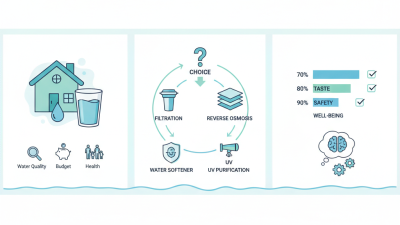
What Are the Best Water Treatment Solutions from China? The answer depends on water quality, climate, budget, and end-use risk. China has developed a broad water-treatment ecosystem, from municipal membrane filtration to industrial wastewater reuse. Its experience is valuable because factories, dense cities, and rural communities often require different designs.
The need is substantial. WHO and UNICEF’s Joint Monitoring Programme reported that 2.2 billion people lacked safely managed drinking water in 2022. The UNESCO World Water Development Report 2024 also noted that agriculture accounts for roughly 70% of global freshwater withdrawals. These figures make water efficiency more than a technical preference. It is an operational necessity.
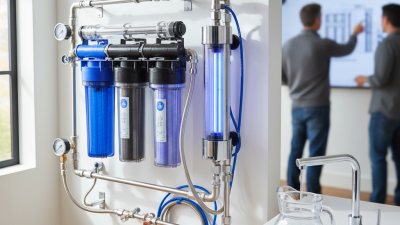
China’s strongest options include ultrafiltration, reverse osmosis, activated carbon, ultraviolet disinfection, ozone treatment, and digital monitoring. For factories, advanced oxidation and zero-liquid-discharge systems can reduce pollutant loads, although they may require high energy and careful maintenance. For smaller communities, containerized systems and solar-assisted treatment can offer practical flexibility. No single system wins everywhere.
Dr. Peter Gleick, co-founder of the Pacific Institute, has said, “The world’s water crisis is not a crisis of scarcity, but a crisis of management.” His observation remains relevant to water and solutions procurement. Buyers should verify performance through pilot testing, lifecycle-cost analysis, and independent laboratory results. China’s GB 5749-2022 drinking-water standard and relevant ISO guidance can support that process. Still, specifications alone do not guarantee success. Operator training, replacement parts, sludge handling, and transparent monitoring matter just as much. The best solution is not always the newest one. It is the one that keeps working when conditions become difficult.
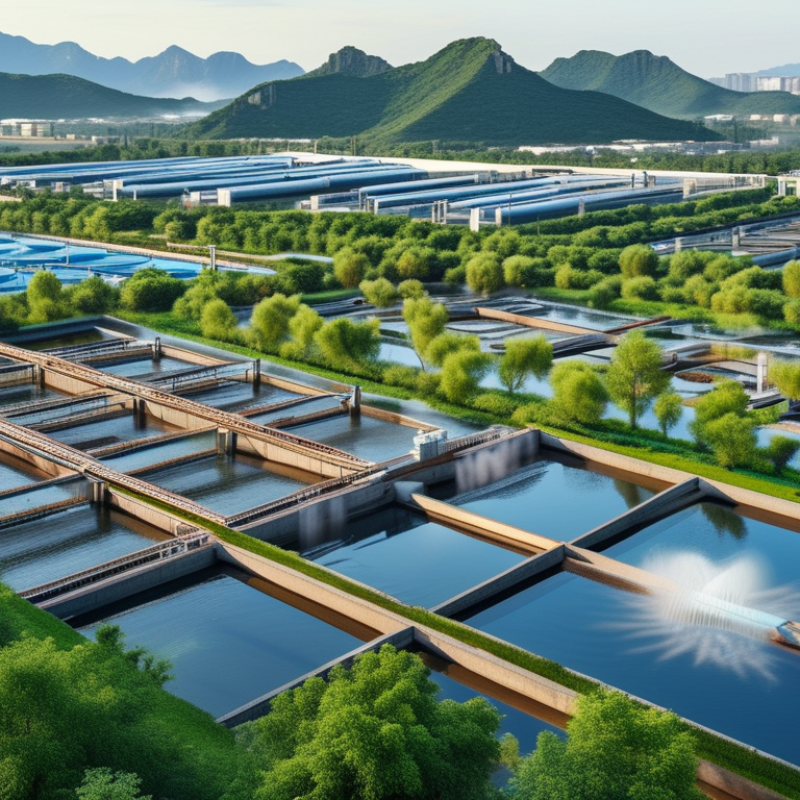
China’s water treatment landscape is shifting from basic compliance toward resilience and water reuse. The Ministry of Housing and Urban-Rural Development reported an urban sewage treatment rate above 98% in its 2023 China Urban-Rural Construction Statistical Yearbook. The figure is impressive. It does not mean every river is healthy. Regional water stress, aging pipes, and uneven sludge management still require field verification.
Core treatment trains usually begin with screening, grit removal, coagulation, and sedimentation. Biological systems then reduce organic pollution and nutrients. Membrane bioreactors offer compact footprints for crowded industrial parks, while ultrafiltration and reverse osmosis support high-quality reuse. Advanced oxidation can address difficult organic compounds, but energy demand and concentrate disposal need careful assessment. China’s 14th Five-Year Plan for Urban Sewage Treatment and Reuse targets reclaimed-water utilization above 25% in water-deficient cities by 2025. That target encourages cooling-water reuse, landscape irrigation, and municipal applications.
Practical selection depends on the influent. A textile site may need color removal and membrane separation. A food plant may prioritize anaerobic digestion and biogas recovery. Continuous sensors can track ammonia, conductivity, turbidity, and flow at the control panel. Yet automation is not magic. Poor calibration can distort decisions. The World Bank’s China Country Water Security Report highlights growing pressure from pollution, scarcity, and climate variability. Operators should therefore combine pilot testing, lifecycle costing, local maintenance skills, and transparent discharge data before scaling any solution.
Matching a treatment system to water quality starts with reliable testing. Test before buying. Measure turbidity, pH, hardness, salinity, organic matter, and microbial indicators. A clear sample may still contain dissolved metals or pathogens. Chinese suppliers commonly provide modular systems for municipal, industrial, agricultural, and commercial applications. The correct choice depends on the source, flow rate, discharge limits, and intended water use.
For muddy surface water, coagulation, sedimentation, and filtration can reduce suspended solids effectively. Activated carbon helps control taste, odor, and some organic compounds. Ultrafiltration suits water requiring finer particle and microbial removal. Reverse osmosis is more suitable for high salinity, dissolved minerals, and certain industrial processes. It also creates concentrated wastewater, which requires responsible handling. For biological wastewater, membrane bioreactors can produce consistent effluent when operators control loading and aeration.
Practical experience matters more than impressive specifications. Request laboratory reports, material details, energy data, and maintenance schedules. A small pilot test can reveal fouling problems before full installation. Ask whether replacement membranes, pumps, and sensors are locally available. Standards and permits should be checked in the target country, not assumed from factory documents. One weakness remains common: some proposals focus on equipment capacity while overlooking operator training. Even a well-designed plant may underperform without regular calibration, cleaning, and water-quality records.
What Are the Best Water Treatment Solutions from China?
Key Water Treatment Systems and Their Practical Applications
China’s water treatment sector offers modular systems for factories, municipalities, and rural communities. Practical selection begins with water testing, not equipment catalogs. Engineers usually check pH, suspended solids, conductivity, oil, ammonia, and biological demand.
Coagulation and sedimentation systems suit textile, food, and metal-processing wastewater. They remove suspended particles before biological treatment. Dissolved air flotation works well when oil and grease rise to the surface. For municipal sewage, moving-bed biofilm reactors provide stable organic removal in compact tanks. Membrane bioreactors produce clearer effluent, but membrane cleaning requires discipline. It is easy to underestimate operating labor.
Ultrafiltration can protect reverse osmosis units during industrial reuse projects. Reverse osmosis reduces salts for boilers, electronics production, and high-quality process water. Ultraviolet disinfection adds protection without chemical storage. Sludge dewatering systems reduce transport volume and improve handling. In northern facilities, insulation and winter temperature control matter greatly. In coastal plants, corrosion-resistant materials deserve attention.
A reliable project includes automatic monitoring, manual sampling, and trained operators. Sensors can drift. People still need to verify readings. Smaller villages may prefer simplified biological tanks, filtration, and disinfection systems. Large industrial parks often need centralized treatment with separate process lines. Performance depends on influent changes, maintenance budgets, and local discharge standards. No system fits every site. A pilot test can reveal weaknesses before construction, although pilot results may not fully represent seasonal conditions.
What Are the Best Water Treatment Solutions from China?
China offers practical water treatment options, from coagulation and sedimentation to ultrafiltration, reverse osmosis, and membrane bioreactors. The right choice depends on feedwater quality, discharge limits, energy prices, and operator skills. China’s Ministry of Housing and Urban-Rural Development reported an urban sewage treatment rate above 98% in recent statistical data. That figure shows scale, but it does not guarantee equal performance at every site.
Quality begins with verified materials, stable membrane flux, and traceable factory testing. Buyers should request pilot data, hydraulic calculations, calibration records, and independent water analysis. China’s GB 5749-2022 standard covers drinking water quality, while GB 18918-2002 addresses municipal wastewater discharge. Export projects may also require local permits and ISO-based quality systems. Compliance is not transferable.
Performance must be measured over time. The International Energy Agency identifies pumping and treatment as major electricity users across water systems. Therefore, an efficient pump, sensible recovery rate, and easy chemical dosing can reduce operating costs. The World Bank’s 2023 water security research also stresses resilient infrastructure and reliable monitoring. Total cost includes installation, membranes, chemicals, sludge handling, spare parts, training, and downtime. A low quotation can hide expensive maintenance.
Some supplier claims remain too optimistic. Short pilot tests may miss seasonal turbidity, fouling, or temperature changes. I would treat laboratory removal rates cautiously. On-site trials, clear warranties, and service response times provide stronger evidence than polished brochures. Perhaps the cheapest system is not the best system. Reliability must survive ordinary working days.
Benchmarking quality, compliance, performance, and total cost across commonly used treatment technologies.
Scores use a 0–100 benchmark index derived from typical engineering ranges for treated-water quality, regulatory robustness, operating performance, and lifecycle cost. Higher cost scores indicate better cost efficiency. Actual results vary with feedwater, design capacity, energy prices, and discharge requirements.
Selecting and Implementing the Right Chinese Water Treatment Partner
Choosing a Chinese water treatment partner requires more than comparing equipment prices. Start with the water itself: test turbidity, hardness, conductivity, organic load, and seasonal variation. A reliable supplier should interpret these results and explain each treatment stage clearly. Ask for process flow diagrams, material specifications, energy estimates, and expected maintenance intervals. Vague answers deserve caution.
Visit the manufacturing site if possible. Inspect welding quality, electrical panels, testing records, and spare-parts storage. Request references from facilities with similar water conditions and capacity. Confirm relevant certifications, technical qualifications, and compliance with the destination country’s safety and discharge requirements. Independent laboratory testing can verify performance claims. Paperwork matters.
Begin with a controlled pilot system rather than a full-scale purchase. Measure flow, pressure, chemical consumption, membrane recovery, and treated-water quality for several weeks. Define acceptance criteria before commissioning. A strong contract should cover training, remote support, response times, documentation, and replacement parts. Keep these details specific.
A polished proposal may still conceal weak after-sales support. This is where many projects struggle. Language differences can also slow troubleshooting. Assign one bilingual technical contact and use shared operating logs. Some designs look efficient but become expensive when operators lack practical training. Leave room for adjustment; real water rarely behaves like a laboratory sample.
| Treatment Solution | Primary Contaminants or Targets | Typical Application | Typical Operating Characteristics | Main Advantages | Key Limitations | Partner Evaluation Priorities |
|---|---|---|---|---|---|---|
| Coagulation and Sedimentation | Suspended solids, turbidity, colloids, and part of the organic matter | Municipal drinking-water pretreatment and industrial wastewater clarification | Chemical dosing is commonly followed by flocculation and gravity settling; performance depends on jar-test results | Proven process, relatively simple operation, suitable for large flow rates | Produces chemical sludge and does not reliably remove dissolved salts | Request jar-test data, chemical-consumption estimates, sludge calculations, and control philosophy |
| Dissolved Air Flotation | Fine suspended solids, algae, oils, grease, and low-density flocs | Food processing, petrochemical, textile, and surface-water treatment | Uses pressurized air bubbles to float particles; chemical conditioning is often required | Compact footprint and effective removal of floatable materials | Requires air-saturation equipment, skimming, and careful hydraulic control | Check flotation tests, scraper reliability, corrosion protection, and spare-parts availability |
| Biological Treatment | Biodegradable organic matter, ammonia nitrogen, and in some designs total nitrogen | Municipal sewage and biodegradable industrial wastewater | Uses microbial activity under aerobic, anoxic, or anaerobic conditions; requires controlled loading and aeration | Can achieve substantial organic-load reduction with comparatively low chemical use | Sensitive to toxic influent, temperature, nutrient balance, and operational stability | Verify biological design calculations, oxygen-demand assumptions, blower efficiency, and operator training |
| Membrane Bioreactor | Biodegradable organics, suspended solids, and microorganisms | Water reuse, compact municipal plants, and facilities with stringent effluent requirements | Combines biological treatment with membrane separation; membrane fouling must be controlled | Produces low-suspended-solids effluent and requires less space than many conventional systems | Higher energy use, membrane cleaning requirements, and greater process sensitivity | Assess flux assumptions, fouling-control strategy, membrane replacement cost, and remote monitoring |
| Ultrafiltration | Suspended solids, colloids, bacteria, and macromolecules | Drinking-water polishing, pretreatment for reverse osmosis, and industrial reuse | Pressure-driven membrane process; pretreatment and periodic backwashing are important | Consistent particle removal and effective protection for downstream membranes | Does not provide complete dissolved-salt removal and can foul without adequate pretreatment | Request feed-water limits, permeability data, cleaning procedures, and module replacement terms |
| Reverse Osmosis | Dissolved salts, many metals, microorganisms, and a broad range of dissolved contaminants | Desalination, boiler feedwater, process water, and high-quality water reuse | Requires pressurized feedwater, pretreatment, concentrate management, and membrane cleaning | High dissolved-solids removal and widely adaptable modular design | Creates a concentrate stream and may require significant energy and pretreatment | Compare recovery assumptions, salt-rejection projections, energy consumption, and concentrate-disposal options |
| Ion Exchange | Specific ions such as hardness, nitrate, or selected metals | Demineralization, softening, polishing, and targeted contaminant removal | Uses resin beds that require periodic regeneration or replacement | Selective treatment and reliable polishing when feedwater chemistry is well characterized | Regenerant chemicals create wastewater and competing ions can reduce capacity | Review resin-life estimates, regeneration chemistry, wastewater handling, and laboratory verification |
| Ultraviolet Disinfection | Bacteria, viruses, and other microorganisms | Final disinfection for drinking water, treated wastewater, and process water | Requires adequate UV transmittance and controlled exposure dose; does not remove dissolved contaminants | No chemical residual and generally no disinfection by-products from the UV process itself | Provides no lasting residual protection and lamp sleeves require cleaning | Confirm validated UV dose, sensor calibration, lamp-life assumptions, and automatic cleaning design |
| Advanced Oxidation | Hard-to-biodegrade organic compounds, taste-and-odor compounds, and selected micropollutants | Advanced water reuse and difficult industrial wastewater polishing | Generates highly reactive species using combinations such as UV, ozone, peroxide, or catalysts | Can break down contaminants that are poorly removed by conventional biological treatment | Potentially high energy and chemical demand; by-products and residual oxidants require control | Demand pilot testing, by-product analysis, chemical-safety documentation, and lifecycle-cost modelling |
| Sludge Dewatering | Water content in biological, chemical, or membrane-treatment sludge | Municipal and industrial treatment plants requiring lower sludge volume for transport or disposal | Uses equipment such as filter presses, belt presses, or centrifuges; polymer conditioning is often used | Reduces sludge volume and can improve handling efficiency | Requires polymer management, routine cleaning, and appropriate solids-disposal planning | Verify feed-solids assumptions, cake-moisture guarantees, polymer consumption, and maintenance access |