
China Top 10 Circuit Breaker Box Manufacturers

China’s Circuit Breakers Box industry has become an important part of global electrical infrastructure. Manufacturers now serve residential, commercial, industrial, and renewable-energy projects. Their products protect circuits from overloads, short circuits, and equipment damage.

This guide examines China’s top 10 Circuit Breakers Box manufacturers through practical purchasing criteria. These criteria include product quality, certification records, testing capability, enclosure design, customization, production capacity, and after-sales support. Factory experience also matters. A polished website cannot replace stable delivery performance or traceable inspection reports. Buyers should check voltage ratings, current capacity, breaking capacity, ingress protection, and thermal performance before selecting a supplier. Small details matter.

Mike Holt, a widely recognized electrical educator and code expert, offers a useful warning: “Electricity is unforgiving.” His words remain relevant when comparing circuit protection equipment. A reliable manufacturer should explain technical limits clearly. It should also provide installation guidance without hiding weaknesses. Some suppliers may appear competitive because of low prices, yet their documentation may be incomplete. That is a risk worth questioning.

The companies introduced here are not judged by marketing claims alone. Their manufacturing history, engineering resources, quality controls, export experience, and customer feedback deserve closer attention. Rankings can change. Market conditions change faster. This outline therefore aims to support careful comparison, not blind purchasing. It may still miss regional service differences or project-specific requirements. Readers should verify current certifications and technical data directly with each manufacturer. A qualified electrical professional should review final equipment selections, especially for high-load or safety-critical applications.
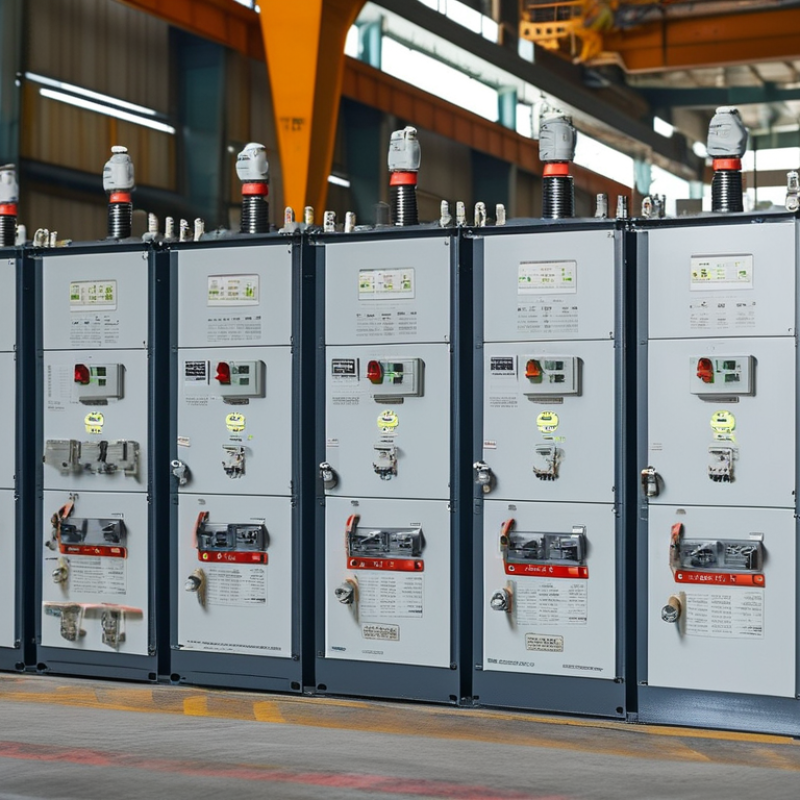
China Top 10 Circuit Breaker Box Manufacturers

What Is a Circuit Breaker Box and Why Does It Matter?

A circuit breaker box is the building’s electrical control center. It receives incoming power and divides it into protected branch circuits. Each breaker trips when current becomes dangerously high. Without this separation, one damaged cable could heat unseen inside a wall.

The National Fire Protection Association reported about 32,000 U.S. home fires involving electrical distribution and lighting equipment from 2015 to 2019. These fires caused roughly 470 civilian deaths and 1,100 injuries. The figures show why enclosure quality, correct breaker ratings, and secure terminals matter. A box should also leave usable space for inspection and future circuits.

It is not just a metal cabinet.

The International Energy Agency reported that global electricity demand rose by about 2.2% in 2023 and expected stronger growth through 2026. More appliances, solar systems, and electric equipment can increase panel complexity. A practical inspection lesson is simple: a tidy front cover does not prove safe wiring. Heat marks, loose conductors, corrosion, or repeated trips need professional assessment. I would also question oversized breakers, even when they appear convenient. They can hide a cable’s limited capacity. For buyers comparing China’s top circuit breaker box manufacturers, technical drawings, insulation performance, certification records, and factory quality controls deserve more attention than enclosure appearance alone. NFPA and IEA data support that cautious approach, though real safety still depends on correct installation and regular maintenance.

How China’s Circuit Breaker Box Manufacturing Industry Has Evolved

China Top 10 Circuit Breaker Box Manufacturers

How China’s Circuit Breaker Box Manufacturing Industry Has Evolved

China’s circuit breaker box industry has moved beyond basic enclosure production. Earlier factories focused on stamped steel boxes, simple plastic covers, and manual assembly. Today, many facilities use CNC punching, automated bending, and powder coating lines. These changes improve hole alignment, surface protection, and production consistency.

The change is visible. A modern box may include modular rails, sealed cable entries, flame-retardant materials, and clearer circuit identification. Engineers also consider heat dissipation, moisture resistance, and maintenance access during design. In factory audits, I look for traceable material records and stable quality checks. Steel thickness, coating adhesion, terminal torque, and insulation distance deserve close attention.

Testing has become more structured as export requirements grow. Manufacturers commonly perform temperature-rise checks, dielectric tests, mechanical inspections, and enclosure protection assessments. Digital production records can connect each batch to its components and inspection results. This supports more reliable communication between factories, contractors, and distributors.

Not everything improved. Some suppliers still prioritize fast delivery over long-term enclosure performance. A neat appearance cannot replace verified electrical protection. Smaller workshops may also depend too heavily on final inspection. That approach misses problems created during stamping, wiring, or assembly. The industry is becoming more technically capable, but process discipline remains uneven. Buyers should examine drawings, test evidence, material declarations, and sample performance before approving large orders.

China Top 10 Circuit Breaker Box Manufacturers — How China’s Circuit Breaker Box Manufacturing Industry Has Evolved

China’s circuit breaker box sector has expanded alongside electrical infrastructure, industrial automation, renewable-energy projects, and export-oriented manufacturing. The chart uses China’s HS 853710 electrical control panel exports as an industry-level proxy; the category includes circuit breaker boxes and related low-voltage control assemblies, rather than individual company data.

Export value increased substantially between 2019 and 2022, reflecting stronger demand for low-voltage distribution equipment and control panels. The moderate decline in 2023 indicates market normalization after the peak expansion period. Source: UN Comtrade HS 853710 trade classification, shown in US$ billions.

Key Standards and Features of High-Quality Circuit Breaker Boxes

A high-quality circuit breaker box begins with compliance, not appearance. For Chinese manufacturers, IEC 61439, IEC 60670, UL 67, or applicable national standards may define different requirements. The correct standard depends on the box’s function, voltage, installation environment, and target market. A credible supplier should provide test reports, factory inspection records, and traceable material data. This evidence matters. It is stronger than polished product photos.

The enclosure should resist heat, impact, corrosion, and flame spread. Its IP rating must match the installation location, especially in dusty workshops or damp utility rooms. Inside, copper busbars need stable spacing, secure terminals, and adequate short-circuit withstand capacity. Breakers should fit firmly, with clear ON and OFF positions. A tight door is useful, but it cannot compensate for poor wiring space. Look for a generous bend radius and accessible neutral and earth terminals.

Reliable production also includes dimensional checks, insulation tests, temperature-rise testing, and functional inspection before shipment. Labels should remain readable after cleaning and years of service. Some suppliers understate torque control. That small omission can create heat at a terminal. No enclosure is perfect. I would question any catalogue claiming universal compatibility. Actual field conditions often expose weaknesses that laboratory samples miss. A careful buyer should request samples, drawings, installation instructions, and batch records before approval.

China Top 10 Circuit Breaker Box Manufacturers - Key Standards and Features of High-Quality Circuit Breaker Boxes

No. Evaluation Dimension Recommended Specification or Standard Key Quality Features Typical Application
1 Applicable Product Standard IEC 61439-3 for low-voltage distribution boards; IEC 60670-1 for boxes and enclosures for electrical installations. UL 67 may apply to panelboards intended for North American markets. Clear certification scope, documented design verification, traceable test reports, and consistent production controls. Residential, commercial, and light industrial distribution systems.
2 Rated Voltage Common low-voltage ratings include 230/400 V AC in IEC-based systems and 120/240 V AC or 120/208 V AC in North American systems, subject to the product design. Voltage marking is permanently visible, compatible breakers are specified, and insulation clearances match the declared rating. Single-phase and three-phase low-voltage circuits.
3 Rated Current Capacity Typical enclosure configurations support main and branch devices from approximately 40 A to 250 A, depending on the enclosure, busbar, and breaker arrangement. Adequate conductor space, temperature-rise verification, correctly sized terminals, and no excessive heating under rated load. Apartment distribution, offices, retail units, workshops, and small commercial facilities.
4 Short-Circuit Rating The prospective short-circuit current and the assembly short-circuit withstand capability must be coordinated with the installed protective devices. Values are commonly declared in kA according to the applicable system standard. Verified fault-current performance, secure busbar supports, robust mounting rails, and clear upstream protection requirements. Installations requiring coordinated overcurrent protection.
5 Ingress Protection IP30 is commonly used for indoor enclosures with protection against objects larger than 2.5 mm. IP40, IP54, IP55, or higher may be selected where additional protection is required, in accordance with IEC 60529. Continuous door seals where required, protected cable entries, corrosion-resistant hardware, and a verified enclosure rating. Indoor rooms, utility areas, workshops, and selected outdoor applications.
6 Enclosure Material Powder-coated galvanized steel, stainless steel, polycarbonate, ABS, or other suitable insulating materials may be used according to the environment and enclosure design. Uniform coating, adequate mechanical strength, flame-retardant insulating parts where required, and resistance to corrosion and impact. Indoor, corrosive, humid, industrial, and outdoor installations.
7 Busbar and Terminal Construction Copper or suitably rated conductive busbars with insulated supports; neutral and protective-earth terminals should be arranged according to the wiring system. Reliable torque retention, adequate creepage and clearance distances, anti-loosening hardware, and clearly identified terminals. Distribution boards with multiple outgoing circuits.
8 Circuit Capacity and Modularity Common designs provide approximately 4 to 48 modular ways, depending on the enclosure size and breaker format. DIN rails or compatible mounting systems, reserved spare ways, flexible cable routing, and easy access for maintenance. Residential consumer units, office panels, and small commercial boards.
9 Safety and User Protection Finger-safe barriers, insulated covers, circuit identification, protective-earth continuity, and lockable or tool-operated access where required. Reduced accidental contact risk, clear labeling, safe isolation provisions, and suitable separation between live parts and accessible surfaces. Homes, public buildings, workplaces, and maintenance-access areas.
10 Testing and Documentation Routine verification should cover wiring, protective-circuit continuity, insulation performance, dielectric properties, mechanical operation, and labeling as applicable to the assembly standard. Inspection records, wiring diagrams, installation instructions, product markings, spare-part information, and batch traceability. Projects requiring inspection, approval, commissioning, and long-term maintenance.

Note: Exact ratings, certification marks, enclosure dimensions, and compatible circuit breakers must be confirmed from the manufacturer’s current technical documentation and the electrical regulations applicable to the installation location.

China’s Top 10 Circuit Breaker Box Manufacturers

China’s Top 10 Circuit Breaker Box Manufacturers represent a broad manufacturing sector, from compact residential enclosures to heavy-duty industrial distribution cabinets. Experienced buyers should examine factory records, not only online rankings. Reliable manufacturers usually provide clear drawings, material certificates, routine test reports, and traceable production batches. Their products may follow applicable IEC or Chinese GB requirements, depending on the target market. Certification alone is not enough.

A strong supplier controls sheet-metal cutting, welding, coating, insulation, and final assembly under one quality system. Look for galvanized steel, flame-retardant polymer parts, secure door hinges, and protected cable entry points. In a practical factory audit, inspect panel alignment and terminal torque. Small gaps can allow dust and moisture inside. Ask for enclosure protection tests, temperature-rise data, short-circuit ratings, and sample inspection records. Good documentation saves time during installation.

Communication also matters. Engineers should answer questions about breaker compatibility, busbar spacing, neutral terminals, and custom dimensions without vague promises. Request a sample before placing a large order. It can reveal sharp edges, weak locks, or crowded wiring channels. No supplier is perfect. Even an experienced manufacturer may miss a packaging detail or revise a component without timely notice. Buyers should record approved specifications and confirm every change in writing. Delivery history, spare-part support, and after-sales response often separate a dependable partner from a low-cost seller.

How to Compare and Select the Right Chinese Manufacturer

China Top 10 Circuit Breaker Box Manufacturers: How to Compare and Select the Right Chinese Manufacturer

Rising electricity demand makes dependable protection equipment more important. The IEA Electricity 2024 report forecasts global electricity demand growth of about 4% in 2024 and 2025. This growth increases pressure on manufacturers, testing systems, and delivery schedules. However, a polished website proves little. I have found factory records more useful than sales language.

Compare manufacturers through documented ratings, not only price. Check rated current, breaking capacity, insulation voltage, temperature-rise results, and enclosure protection. IEC 60947-2 provides a practical reference for low-voltage circuit breakers. Request recent type-test reports, calibration records, and material traceability.

A serious supplier should explain copper purity, busbar thickness, terminal design, and heat dissipation. Ask for production photographs and a live factory audit. Do not accept copied certificates without verification.

Tips:

Build a comparison table. Record test dates, standards, sample results, warranty terms, and lead times. Ask for three samples from different batches. Measure terminal torque and inspect labels. Small details matter.

The IEA report also highlights increasing grid investment needs, but demand alone cannot guarantee quality. A low quotation still attracts me, sometimes too quickly. It may hide thinner metal, weaker testing, or costly replacements. Compare total ownership cost instead. Review failure procedures, spare-part availability, export packaging, and response times. A manufacturer that admits a limitation may be more reliable than one promising everything. Supplier selection is not perfectly objective, and my scoring model may still miss field conditions. Pilot orders reduce that risk.

Skip to content