Choosing the best water recycling systems requires more than comparing equipment prices. It demands evidence, site experience, and realistic risk assessment.
The United Nations World Water Development Report 2024 identifies agriculture as the largest user of global freshwater withdrawals. Industry and cities also face growing pressure from drought, population growth, and stricter discharge expectations. These trends make recycled water a practical resource, not merely a backup supply.
The right system depends on water quality goals. A hotel may need treated water for toilets, cooling towers, and irrigation. A semiconductor plant may require ultra-pure water with extremely low contaminant levels. The difference is substantial.
Look closely.
The U.S. Environmental Protection Agency’s Potable Reuse Compendium stresses treatment trains, monitoring, and multiple protective barriers. The World Health Organization also promotes health-based targets and preventive risk management for safe water reuse. These reports support a central lesson: one filter cannot carry the entire safety burden.
Peter Gleick, co-founder of the Pacific Institute, has said, “The world’s water crisis is not a crisis of scarcity, but a crisis of management.” His observation applies directly to system selection. Poorly managed reuse can waste energy, increase maintenance, and create false confidence.
A reliable evaluation should examine source-water variability, recovery rate, energy demand, operator skills, maintenance access, and verified removal performance. Ask for independent test results, not impressive brochures. Check performance during storms, temperature changes, and peak demand.
There is no universal winner. Even advanced water recycling systems can underperform when monitoring, training, or replacement schedules are neglected. The best choice is the system that fits the site, proves its performance, and remains manageable years later.
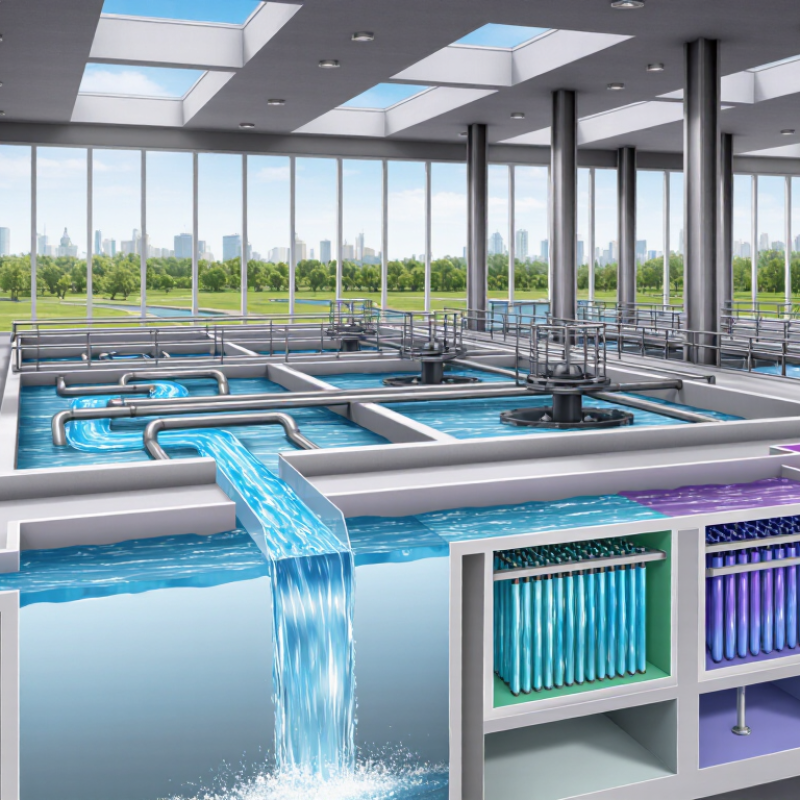
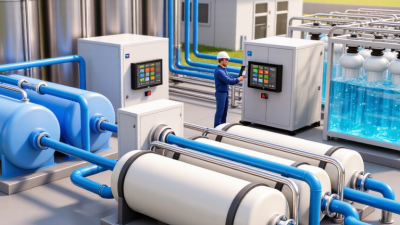
Water recycling systems turn used water into a controlled resource.
The process usually begins with screening, which removes hair, plastics, and larger debris. Biological treatment then reduces organic matter through carefully managed microorganisms.
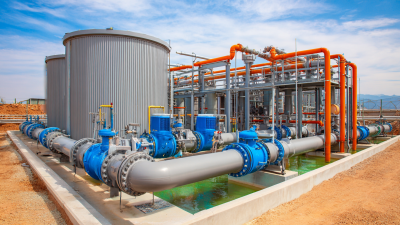
After that, membranes such as ultrafiltration or reverse osmosis remove fine particles, salts, and many dissolved contaminants. Disinfection provides another barrier, often using ultraviolet light or advanced oxidation.
The treatment train depends on the water’s source and intended use. Irrigation may need fewer treatment barriers than drinking-water applications.
The U.S. Environmental Protection Agency’s Water Reuse Action Plan describes reuse for agriculture, industry, landscaping, and potable supplies. Its guidance also stresses risk assessment, monitoring, and multiple barriers.
The United Nations World Water Development Report 2017 estimated that more than 80% of global wastewater was discharged without treatment. That figure shows the opportunity, but it also exposes the weakness of rushed installations.
No system is perfect.
Tips:
Test the incoming water first. Check salinity, pathogens, chemicals, flow variation, and seasonal changes. Select equipment around real data, not attractive capacity claims.
Ask how often membranes require cleaning and where residual solids will go. Include online sensors for turbidity, conductivity, pressure, and disinfectant levels.
Keep trained operators involved. Automation helps, but it does not replace judgment. A small design mistake can become a costly maintenance problem.
Choosing a water recycling system starts with demand, not equipment. Map daily use by location, timing, and quality requirement. A hotel may need treated water for toilet flushing, laundry, and cooling towers. A factory may require different standards for process water. Record peak demand, not only monthly averages. A spreadsheet can still mislead.
Water sources deserve equal scrutiny. Possible inputs include greywater, rainwater, stormwater, cooling blowdown, and treated municipal wastewater. Test turbidity, salinity, nutrients, oils, pathogens, and seasonal variation. A roof may collect clean rain in one month and contaminated runoff after a long dry period.
The US EPA Water Reuse Action Plan emphasizes fit-for-purpose treatment and source control. That principle is practical: do not treat every source to drinking-water quality when irrigation is the actual need.
Scale matters. The UNESCO World Water Development Report 2024 states that 2.2 billion people lacked safely managed drinking water in 2022. The report also links growing demand with climate pressure and unequal access. Meanwhile, agriculture accounts for roughly 70% of global freshwater withdrawals, according to UN water assessments.
These figures justify reuse, but they do not replace a site survey. Compare available flow with demand, then assess energy, storage, operator skills, monitoring, and disposal needs. I would also challenge optimistic recovery rates. Membranes foul. Tanks overflow. Data gaps remain. A small pilot, using representative water samples across seasons, can expose those weaknesses before major construction.
How to Choose the Best Water Recycling Systems?
Choosing a water recycling system starts with the water, not the equipment catalogue. Cooling tower blowdown, laundry water, and food-process wastewater carry different risks. Measure turbidity, organic load, nutrients, salts, pathogens, and seasonal variation before selecting treatment. Tests can mislead. A single sample may hide weekend peaks or sudden chemical changes. For low-solids greywater, screening, biological treatment, and disinfection may support toilet flushing or irrigation. Activated carbon can reduce odors and dissolved organics. Ultraviolet treatment helps control microorganisms, but it does not remove salts or suspended solids.
Higher-quality reuse demands a stronger treatment train. Ultrafiltration suits water containing fine particles, bacteria, and some viruses. Reverse osmosis is more suitable when dissolved salts, metals, or persistent contaminants require removal. It needs effective pretreatment, because fouling can quickly reduce flow and raise maintenance costs. Ozone can improve color and odor control, yet it requires careful dosing and monitoring. The final choice should match the intended use, discharge conditions, operator skills, and available laboratory support. Sometimes, a simpler system performs better because staff can maintain it consistently.
Tips: Define the reuse target in measurable terms, such as conductivity, turbidity, or microbial limits. Request pilot testing with real wastewater. Check how filters, membranes, chemicals, and sensors will be serviced. Leave room for human error; alarms and automatic shutdowns are useful, but they are not substitutes for routine sampling. A system that looks efficient on paper may disappoint under changing water quality.
| Treatment Technology | Typical Water Quality Requirement | Main Contaminants Removed | Typical Product Water Quality | Indicative Recovery | Best-Fit Reuse Applications | Key Selection Considerations |
|---|---|---|---|---|---|---|
| Screening and Sedimentation | Raw or lightly polluted water with large solids and settleable particles | Leaves, plastics, grit, sand, suspended solids | Lower turbidity and reduced solids load; dissolved contaminants remain | Approximately 90–99% of flow, depending on sludge handling | Irrigation pretreatment, stormwater management, process-water pretreatment | Requires sufficient settling time and regular removal of screenings and sludge |
| Coagulation and Filtration | Water containing fine suspended particles, colloids, color, or natural organic matter | Turbidity, colloids, some phosphorus, color, particulate metals | Often suitable for non-potable reuse after disinfection; performance depends on filter media and dosing | Approximately 90–98% of flow | Cooling-water makeup, toilet flushing, irrigation, industrial washing | Chemical dose, pH, alkalinity, temperature, and sludge production affect results |
| Biological Treatment | Municipal wastewater or biodegradable industrial wastewater with measurable BOD and COD | Biodegradable organics, ammonia, suspended biological solids; nitrogen removal may require dedicated stages | Typical secondary effluent can reach BOD below 30 mg/L and TSS below 30 mg/L when properly operated | Approximately 85–98% of flow | Landscape irrigation, agricultural reuse, cooling towers, industrial utility water | Needs stable biological loading, oxygen control, nutrient balance, and sludge management |
| Membrane Bioreactor (MBR) | Municipal or industrial wastewater requiring compact, consistently low-turbidity effluent | Suspended solids, bacteria, biodegradable organics, and some nitrogen with suitable biological design | Typically very low TSS and turbidity; often suitable as feed to advanced membrane or disinfection systems | Approximately 90–99% of flow | High-quality irrigation, toilet flushing, industrial process reuse, cooling-water applications | Higher energy demand and membrane fouling control than conventional biological treatment |
| Ultrafiltration (UF) | Pre-treated water needing removal of fine particles, colloids, bacteria, and most suspended solids | Suspended solids, colloids, bacteria, and some viruses; dissolved salts generally pass through | Low turbidity, often below 0.1 NTU with suitable operation; not desalinated | Approximately 85–98% of flow | Irrigation, cooling-water pretreatment, industrial wash water, RO pretreatment | Needs effective pretreatment and periodic backwashing or chemical cleaning |
| Nanofiltration (NF) | Water requiring partial removal of hardness, color, organic compounds, and multivalent ions | Hardness ions, sulfate, color, natural organic matter, and selected micropollutants | Partially softened water with reduced organic content; monovalent salts are less completely removed than by RO | Approximately 60–90% of flow | Industrial process water, boiler pretreatment, reuse requiring hardness control | Feed pressure, scaling potential, dissolved organic matter, and required salt rejection determine feasibility |
| Reverse Osmosis (RO) | Water requiring substantial reduction of dissolved salts, metals, nutrients, and many dissolved contaminants | Dissolved salts, hardness, nitrate, fluoride, many metals, and many dissolved organic compounds | Low-total-dissolved-solids water; exact quality depends on feed water, membrane type, and operating conditions | Approximately 50–85% of flow, depending on feed and system design | High-pressure boiler feed, ultrapure-water pretreatment, industrial process reuse, potable reuse trains | Requires pretreatment, antiscalant or scale control, energy, concentrate management, and remineralization when needed |
| Activated Carbon Adsorption | Water containing residual chlorine, taste and odor compounds, or selected dissolved organic contaminants | Chlorine, taste and odor compounds, many hydrophobic organics, and some micropollutants | Improved taste, odor, and organic quality; dissolved salts and pathogens are not reliably removed | Approximately 95–99% of flow | Potable-water polishing, industrial reuse, process-water conditioning | Media capacity, contact time, organic loading, and replacement or regeneration requirements are critical |
| Ultraviolet (UV) Disinfection | Low-turbidity water requiring microbial inactivation without adding a chemical disinfectant | Bacteria, viruses, and protozoa through ultraviolet exposure; no meaningful removal of dissolved chemicals | Microbiologically disinfected water when the validated UV dose is maintained | Approximately 99–100% of flow | Irrigation, toilet flushing, cooling systems, and final disinfection in advanced reuse | Turbidity, UV transmittance, lamp intensity, flow rate, and lamp maintenance affect performance; no residual protection |
| Advanced Oxidation Process (AOP) | Highly treated water requiring additional reduction of trace organic contaminants | Selected pharmaceuticals, pesticides, taste-and-odor compounds, and other trace organics | Further oxidized water; by-products must be evaluated and controlled | Approximately 90–99% of flow | Advanced potable reuse, high-value industrial reuse, sensitive process applications | Usually installed after filtration or RO; ozone, peroxide, UV energy, bromide, and by-product control require careful assessment |
Choosing a water recycling system starts with demand, not brochure capacity. Record daily flow, peak use, seasonal changes, and incoming water quality. A small facility may need 2,000 gallons daily but 600 gallons within one hour. That peak can expose an undersized pump or storage tank. Ask for tested capacity under similar conditions. Rated capacity alone can mislead. My practical preference is a system operating near 70–80% of its claimed maximum, leaving room for surges and aging filters. Measure it twice. Recheck the numbers after a month of real use.
Compare costs across the full service life, not only the purchase price. Include installation, tanks, controls, replacement media, labor, inspections, and wastewater handling. Request a five-year cost table with its assumptions clearly shown. Maintenance details deserve equal attention. Can staff reach filters without moving heavy equipment? Are sensors easy to calibrate? A weekly inspection sounds minor, but missed checks can reduce water quality and increase energy demand. Keep records. Track pressure, odor, flow, and cleaning dates. This log supports better decisions and reveals recurring faults. It also exposes optimistic maintenance promises.
Energy use depends on pumping height, filtration resistance, disinfection, and operating hours. Compare kilowatt-hours per 1,000 gallons under identical flow conditions. Ask for independent test results, calibration records, and references from similar installations. Experienced operators often explain downtime better than polished sales literature. Check whether standby modes actually reduce consumption. Some systems save energy but require frequent manual resets. That trade-off may be unacceptable in a busy building. Review the figures with a qualified water professional, and question any result that cannot be reproduced.
Choosing the best water recycling system starts with verification, not glossy recovery percentages. Define the intended use: toilet flushing, irrigation, cleaning, or drinking. The WHO Guidelines for Drinking-water Quality require no detectable E. coli in any 100 mL sample. Ask for independent laboratory results covering pathogens, turbidity, nutrients, and chemicals. Request raw test data, not only annual averages. One missed maintenance event can change the risk quickly. It happens.
Regulations differ by location and end use. The U.S. EPA’s Water Reuse Action Plan emphasizes fit-for-purpose treatment, monitoring, and risk management. Confirm approval requirements with the local water authority before purchasing equipment. For non-potable demand, the UNESCO World Water Development Report 2024 notes that agriculture accounts for roughly 70% of global freshwater withdrawals. This supports reuse, but not careless reuse. Check pipe labeling, backflow prevention, air gaps, alarms, sampling ports, drainage, and electrical protection. Require documented commissioning tests. A qualified installer should explain failure procedures in plain language.
Long-term performance depends on boring details. Review filter replacement intervals, membrane cleaning, sensor calibration, sludge removal, energy use, and spare-part availability. Keep a maintenance log with dates and test results. Ask how performance is measured after five years, not only on installation day. I would distrust any supplier promising zero maintenance. Real systems age, operators make mistakes, and water quality changes. Build in independent inspections and a written response plan for alarms, failed tests, and unexpected odors.
U.S. EPA Cryptosporidium treatment benchmarks for verifying safety and regulatory readiness
Higher source-water contamination requires greater pathogen removal or inactivation. Use these benchmarks as one part of system selection, together with local reuse regulations, validated treatment performance, qualified installation, continuous monitoring, maintenance records, and independent water-quality testing.
Reference: U.S. EPA Long Term 2 Enhanced Surface Water Treatment Rule, 40 CFR 141.711. Requirements may differ by jurisdiction, source water, and intended reuse application.