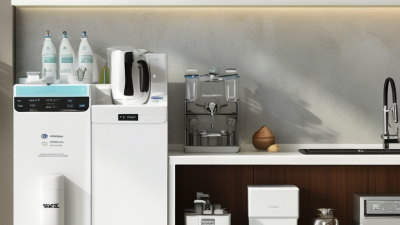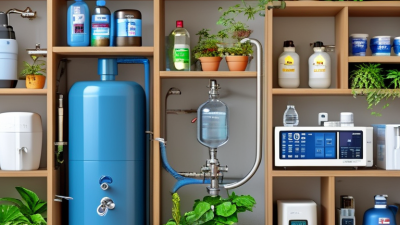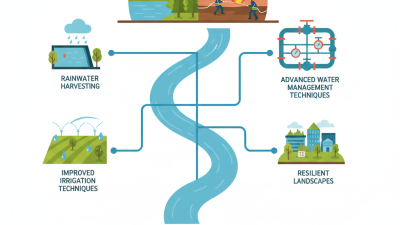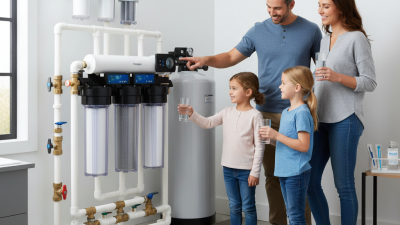
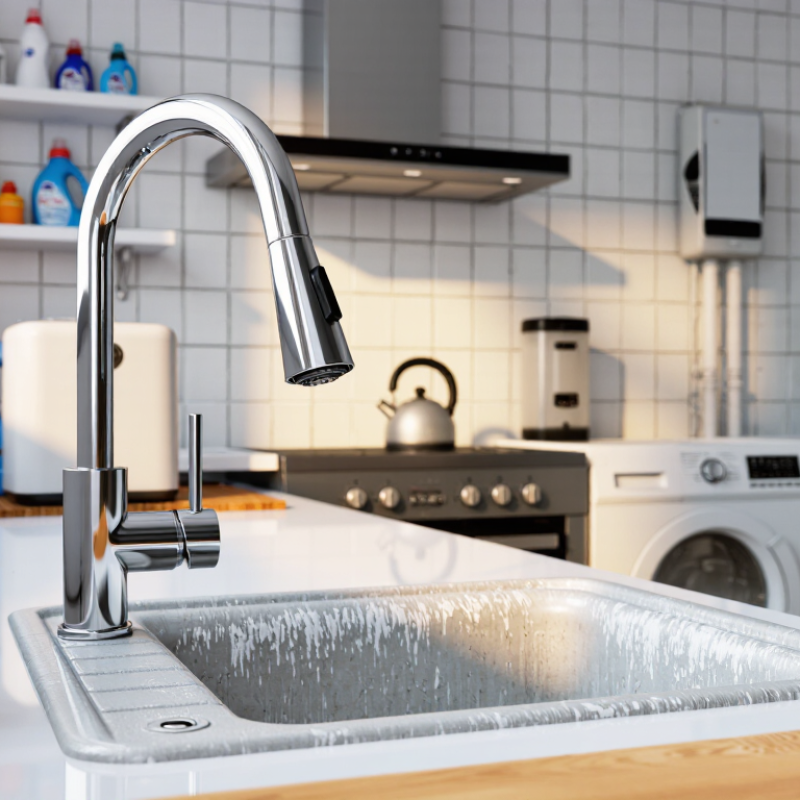
Hard water leaves evidence behind. White scale gathers around faucet bases, soap lathers poorly, and kettle interiors develop a rough, chalky coating. These signs usually point to elevated calcium and magnesium, but the right treatment depends on measured water conditions—not guesswork. The best water systems for hard water should match your household’s hardness level, daily water use, plumbing, and maintenance preferences.
Water-quality expert Dr. Joseph Cotruvo has written extensively about drinking-water quality and treatment. Rather than attribute an unverified quotation to him, this guide follows a practical principle reflected in sound water-treatment advice: “Test the water before choosing the treatment.” A certified laboratory or reliable local testing service can help confirm hardness and identify other concerns. That matters because a softener, a scale-control device, and a drinking-water filter do different jobs. One choice does not solve every problem.
Small details count. Check the system’s rated capacity, regeneration needs, installation requirements, and ongoing costs. Ask whether it addresses the symptoms you actually notice, from stiff laundry to crusted showerheads. Then compare options carefully. There may not be one perfect answer. A larger system can be unnecessary, while an undersized unit may struggle during busy mornings. The tips ahead explain how to evaluate water systems for hard water with clearer expectations, useful questions, and fewer costly assumptions.
Define Your Home’s Water Hardness and Treatment Needs
Before choosing a water system, find out what is in your water. Hardness usually comes from dissolved calcium and magnesium, and a lab test or reliable test kit can estimate the level. Check your local water report, too, but remember that a neighborhood average may not match your tap.
Tip: Test water from the source you plan to treat. Note the result in grains per gallon or milligrams per liter, and test again if your water source changes. A white crust on a kettle or spots on glassware can be clues, not proof. I once treated visible scale as the whole problem; it wasn’t.
Decide what needs attention. A softener can reduce hardness minerals, while sediment, chlorine taste, or other concerns may call for different filtration. Think about where treatment matters: throughout the house, or only at the kitchen sink? Count household members and consider daily water use. A system sized too small may struggle during busy mornings. Too large can add cost without solving a real need.
Tip: Compare your test results with the equipment’s stated capacity and maintenance requirements. Ask a qualified water-treatment professional to explain any recommended testing or equipment in plain language. Keep the results. They make later decisions easier.
Hard water leaves chalky spots on glass, stiffens towels, and can crust around a kettle’s heating element. The right system depends on which problem you want to solve. A water softener typically uses ion exchange to replace calcium and magnesium with sodium or potassium ions. It can reduce scale throughout the home, but needs maintenance and a suitable drain. Check your water test and household usage before choosing capacity.
Filtration works differently. Sediment filters catch grit, while activated carbon can improve chlorine taste and odor. Neither usually removes the minerals that cause hardness. A reverse-osmosis unit can reduce many dissolved substances, including hardness minerals, but it is commonly installed at one tap and produces reject water. It may be excessive if your main concern is spotted shower doors.
Know the limits. Some salt-free conditioners may reduce scale buildup, yet they do not soften water in the same way as ion exchange. Ask for performance data that matches your water conditions, and compare replacement costs, water use, and upkeep. A basic hardness test can prevent an expensive mismatch. I once assumed a filter would fix every symptom; that was too simple. If iron, manganese, or unusual taste is present, test for those too before selecting equipment.
| Tip | What to Compare | How It Works | Best Fit | Important Limitation |
|---|---|---|---|---|
| 1. Test hardness first | Measure hardness in grains per gallon (gpg) or milligrams per liter (mg/L) as calcium carbonate. | A water test identifies calcium and magnesium levels; 1 gpg is approximately 17.1 mg/L as CaCO₃. | Any household deciding whether treatment is needed and how much capacity to select. | Hardness alone does not reveal contaminants such as lead, nitrate, or microorganisms; test for those separately when relevant. |
| 2. Choose ion-exchange softening to remove hardness | Compare rated capacity, flow rate, regeneration settings, and salt use. | A resin exchanges calcium and magnesium ions for sodium or, in some systems, potassium ions. | Homes seeking to reduce scale formation and improve soap performance throughout the plumbing system. | It adds sodium or potassium to the treated water and requires periodic regeneration and maintenance. |
| 3. Size the softener for actual demand | Use measured hardness, household water use, peak flow, and the system’s usable capacity. | Correct sizing helps balance regeneration frequency with the ability to meet household flow needs. | Households with several occupants, multiple bathrooms, or high water demand. | A system that is too small may regenerate often or struggle at peak demand; an oversized system may be inefficient. |
| 4. Consider salt-free conditioning accurately | Check the treatment method, operating conditions, and evidence for the expected scale-control outcome. | Some conditioners alter how minerals form deposits but do not remove calcium and magnesium from the water. | Users who want to reduce scale under suitable conditions without salt-based regeneration. | Water remains hard by standard measurements; soap feel and mineral content may not change as they do with ion exchange. |
| 5. Use sediment filtration for particles, not hardness | Compare micron rating, flow capacity, and cartridge replacement interval. | A sediment filter captures suspended particles such as sand, rust, and silt. | Water with visible particles or as pretreatment to help protect downstream equipment. | It does not remove dissolved calcium or magnesium and therefore does not soften water. |
| 6. Add activated carbon for specific taste and odor concerns | Check the contaminant reduction claims, certification, and rated capacity for the intended use. | Activated carbon adsorbs certain compounds; performance depends on the media and water conditions. | Improving taste or reducing particular chemicals, such as chlorine, when the specific system is designed for them. | Most carbon filters do not remove hardness minerals, and they are not a universal treatment for every contaminant. |
| 7. Consider reverse osmosis for a drinking-water point | Review contaminant-specific performance, daily production, storage, wastewater, and replacement filters. | A semipermeable membrane reduces many dissolved substances in water supplied to a dedicated tap. | Point-of-use treatment when test results indicate a need to reduce particular dissolved contaminants. | It is usually not a whole-house softener; output, maintenance needs, and reject-water volume vary by system and conditions. |
| 8. Match filtration to verified contaminants | Look for independent certification to the relevant standard and for the specific contaminant reduction claim. | Different media and technologies target different substances; no single filter removes everything. | Homes with a water test or public water report identifying a particular treatment concern. | A general “purification” claim is not a substitute for contaminant-specific performance information. |
| 9. Check installation and maintenance needs | Compare space, drain and electrical access, plumbing connections, filter changes, salt refills, and service intervals. | Treatment systems need appropriate installation and upkeep to maintain intended performance. | Homeowners planning a system that fits the available location and maintenance routine. | Neglected filters or resin systems may perform poorly; follow the system’s instructions and service schedule. |
| 10. Compare total operating cost and water needs | Include purchase, installation, replacement media, salt, electricity, service, and any water used during regeneration or treatment. | Operating costs vary with system design, water chemistry, household demand, and local utility rates. | Anyone comparing whole-house softening with point-of-use filtration or a combined setup. | The lowest initial price may not represent the lowest long-term cost or the best match for the water problem. |
Note: Select treatment based on a water test and the specific outcome required. A water softener reduces hardness; filtration systems target particular particles or contaminants according to their design and verified performance.
Hard water can leave chalky rings on taps, stiff towels, and scale inside appliances. Choosing a treatment system starts with two measurements: water hardness and daily household use. A water test can show hardness in grains per gallon or milligrams per liter. Count regular occupants, too, but remember that guests and laundry days change demand. A system sized only for an average day may struggle when several showers run and the washing machine fills.
Tip: Check capacity against both hardness and household use. A larger household with very hard water may need more softening capacity between regeneration cycles. Ask how the rated capacity is calculated, and compare it with your test results. Capacity figures can be confusing. I would not rely on a headline number alone; usage patterns matter.
Regeneration restores a softener’s working capacity, often by rinsing its resin with a salt solution. Some systems regenerate on a timer, while demand-initiated models use measured water consumption. The second approach can reduce unnecessary cycles, though actual savings depend on settings and household habits. Check how much water each regeneration uses and how often it is expected to occur. Frequent cycles may raise water and salt use. In a home with irregular occupancy, settings may need attention after installation; that detail is easy to overlook. Keep an eye on the salt level and water bills during the first few weeks.
Check system capacity, regeneration, and water usage.
Water hardness categories shown are based on U.S. Geological Survey classifications. Test your water before selecting a system; the required capacity and regeneration schedule also depend on household water use and the equipment’s specifications.
Choosing a water system for hard water starts with the space around your pipes. Measure the available area, including room to open a cabinet or replace a filter. A whole-house softener may need a drain, a bypass valve, and a nearby power outlet. Check these requirements before buying equipment. A tight utility closet can turn a straightforward installation into a frustrating job. It happens.
Ask a qualified installer to assess pipe size, water pressure, and drain access. If your home uses a septic system, discuss discharge and local requirements before installation. For maintenance, compare the steps you can realistically keep up with: adding salt, changing cartridges, cleaning a brine tank, or testing water hardness. Set reminders, and keep replacement parts easy to find. Small tasks are easy to forget.
Lifespan depends on water quality, usage, maintenance, and component design. A filter cartridge may need replacement much sooner than the main treatment unit. Request written service intervals and expected replacement costs, not just a broad lifespan estimate. Keep a simple log of installation dates, test results, and repairs. It will help reveal whether performance is slipping. Hardness tests can show changes, but they do not diagnose every water concern. If water develops an unusual taste, odor, or appearance, seek appropriate testing rather than assuming the system needs another setting adjustment. I would not skip this step, even when the water seems fine.
Choosing a water system for hard water means weighing the price tag against years of salt, filters, energy, and maintenance. The U.S. Geological Survey classifies water above 120 milligrams per liter as calcium carbonate as hard. Test your tap water first; a simple test can prevent buying more treatment than you need. A softener may reduce scale on faucets and heating elements, while a sediment filter will not remove dissolved hardness. Different problem, different tool.
Look beyond purchase cost. The U.S. Department of Energy reports that water heating accounts for about 18% of home energy use, so scale buildup deserves attention, though savings vary with water chemistry and household habits. Compare expected salt use, replacement parts, installation, and wastewater needs over several years. Ask for performance data at your measured hardness, not just a broad “hard water” claim. Small details matter. A compact unit may fit beside the laundry sink, but cramped access can make routine servicing a nuisance. I would still leave room for uncertainty: projected savings are estimates, and local water conditions can change. Check the USGS hardness scale and DOE’s home water-heating guidance before deciding.