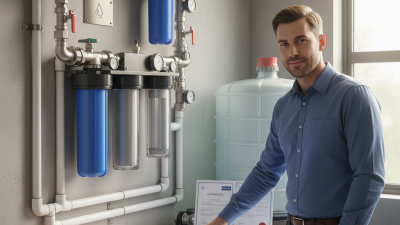
What is Water Recycling Systems and How Do They Work?
Water recycling systems are essential in today's world. As water scarcity issues grow, these systems provide practical solutions. They reuse wastewater, transforming it into a valuable resource.
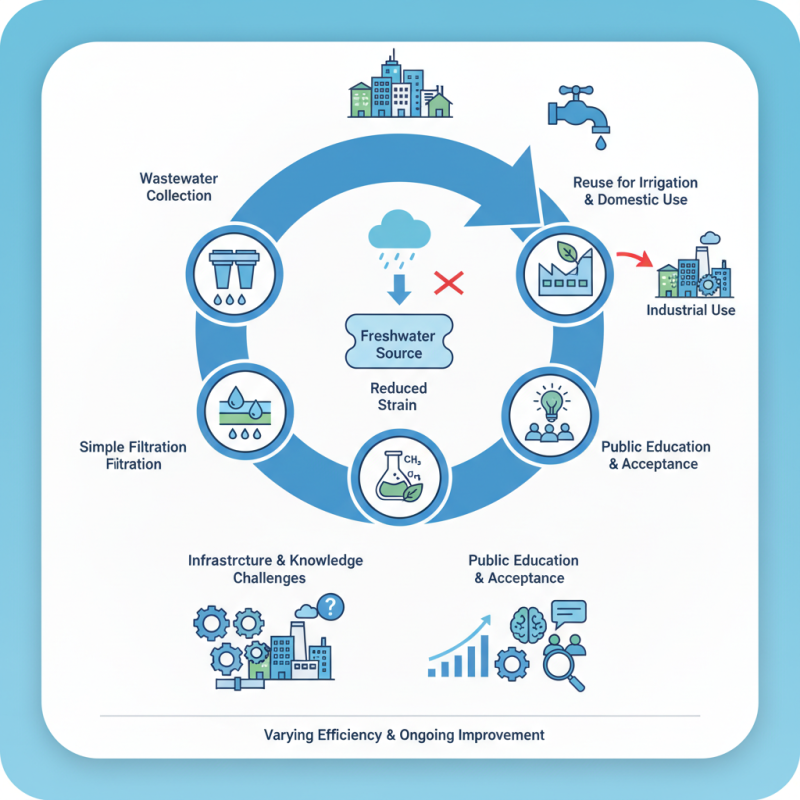
These systems include various technologies, from simple filtration to advanced treatment processes. They work by collecting wastewater, treating it, and returning it for use. This reduces the strain on freshwater sources. However, their implementation can be complicated. Not all communities have the infrastructure or knowledge to adopt them effectively.
Moreover, the efficiency of water recycling systems varies. While some cities have successfully integrated these systems, others still face challenges. Educating the public is crucial. Awareness can drive acceptance and participation in recycling efforts. As we explore these systems, it's important to remain critical of their limitations and seek ongoing improvements.
Definition of Water Recycling Systems and Their Importance in Water Conservation
Water recycling systems are crucial for sustainable water management. These systems collect, treat, and recycle wastewater for various uses. According to the American Water Works Association, approximately 85% of wastewater can be treated and reused. This potential makes water recycling essential in regions facing water scarcity.
The importance of water recycling cannot be overstated. In areas like California, the demand for fresh water continues to increase. A report from the California Water Boards indicated that water recycling can supply up to 1.5 million acre-feet of water annually. This is equivalent to the needs of around 3 million people. However, adoption rates are still low. Public awareness and infrastructure challenges hinder progress.
Despite the benefits, not every recycling system meets health standards. Some systems face scrutiny over potential contaminants. A study by the Water Environment Federation emphasized that stringent regulations are key to ensuring public safety. Continuous evaluation and improvement of these systems are necessary for their success. We must reflect on innovations while addressing existing shortcomings in technology and public acceptance.
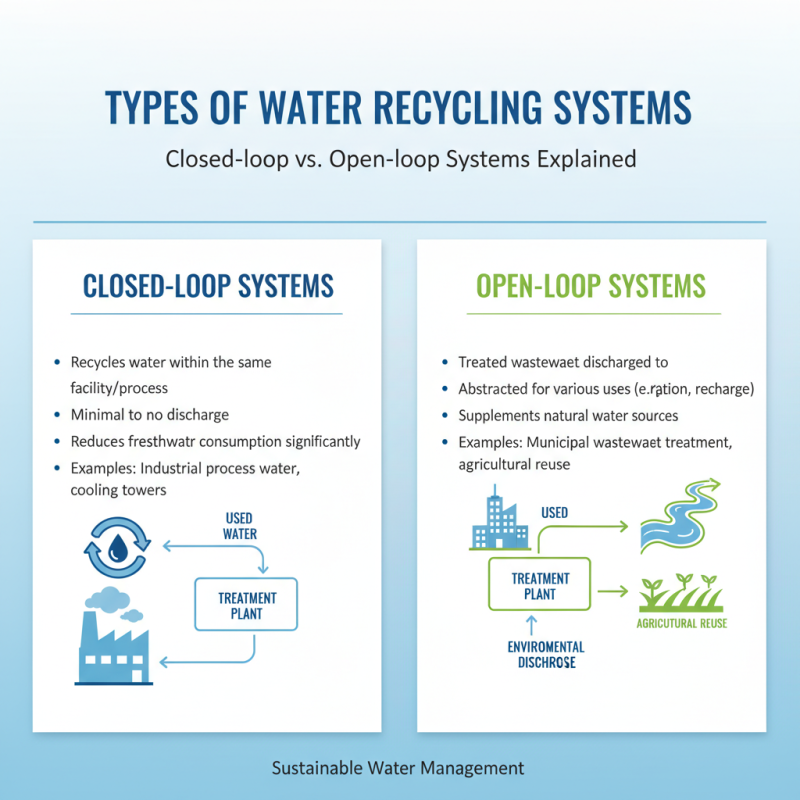
Types of Water Recycling Systems: Closed-loop vs. Open-loop Systems Explained
Water recycling systems are becoming essential in managing water resources sustainably. These systems can be categorized into two primary types: closed-loop and open-loop systems. Understanding their differences is vital for effective implementation.
Closed-loop systems recycle water within a defined circuit. They are common in industrial settings where water is reused multiple times for processes like cooling or rinsing. According to a report by the Water Environment Federation, closed-loop systems can lead to a 30% reduction in water usage. They also minimize wastewater discharge, helping facilities comply with environmental regulations.
Conversely, open-loop systems introduce water from an external source and return it, often after treatment. These systems are more common in municipal applications. They utilize natural bodies of water to replenish supply. However, this approach may carry risks, such as ecological impacts. Studies indicate that open-loop systems can lead to decreased water quality in receiving waters if not managed properly. Balancing water needs with environmental health is critical, highlighting the complexities within water recycling strategies.
Key Components of Water Recycling Systems: Treatment Processes and Technologies
Water recycling systems play a vital role in sustainable water management. They incorporate several treatment processes and technologies designed to reclaim wastewater. These systems can significantly reduce the demand for fresh water. According to the Water Environment Federation, recycling can save up to 30% of a community's water supply.
Key components include pretreatment, biological treatment, and advanced filtration methods. Pretreatment removes large solids and screenings. This step is essential for protecting subsequent processes. Biological treatment typically uses microorganisms to break down organic matter. Technologies like membrane bioreactors enhance efficiency but may require higher energy inputs, presenting challenges.
Advanced filtration techniques, such as reverse osmosis, are crucial for ensuring water quality. Studies indicate that they can remove up to 99% of contaminants. However, the energy consumption and maintenance costs can be significant. Addressing these challenges is critical for system viability. Continuous improvements in technology and design can enhance efficiency and reduce operating costs. The need for reliable performance cannot be overstated in water-stressed regions.
Benefits of Implementing Water Recycling: Economic and Environmental Impacts
Water recycling systems have emerged as vital solutions for addressing water scarcity issues. By treating wastewater and turning it into reusable water, these systems help conserve valuable resources. Implementing water recycling can significantly reduce the demand for freshwater sources, which is crucial for both urban and agricultural areas facing water shortages.
The economic impacts of water recycling are noteworthy. Organizations can lower their water bills by utilizing recycled water for non-potable purposes, such as landscape irrigation and industrial processes. This can lead to substantial cost savings in the long term. However, the initial investment in recycling infrastructure can be high, making it a challenging decision for some communities.
On the environmental side, benefits abound. Water recycling helps reduce the amount of wastewater discharged into oceans and rivers, lessening pollution. It also decreases the stress on existing freshwater sources, contributing to ecosystem preservation. Yet, potential risks must be acknowledged, such as the quality of recycled water and public perception. Ensuring reliable systems and educating the public is essential for successful implementation. Recognizing these challenges can lead to improved practices and innovative solutions in the future.
Global Trends and Statistics on Water Recycling Practices in Various Industries
Water recycling practices are becoming increasingly vital across various industries. Many sectors, such as agriculture, manufacturing, and hospitality, are adopting these systems to manage water resources better. Statistics indicate that water recycling can reduce fresh water usage by up to 50%, showcasing its efficiency. In agriculture, treated wastewater is often used for irrigation. This helps conserve drinking water while ensuring crops receive adequate hydration.
However, challenges remain in water recycling implementation. Not every region has the necessary infrastructure, which can hinder adoption. Many industries struggle to balance the initial investment costs with long-term savings. There’s also the question of public perception. Some consumers remain skeptical about the safety of recycled water. Ongoing education is crucial to improving acceptance rates. Data show that as awareness grows, so does the implementation of these systems.
In regions like California and Australia, water recycling has become a key strategy during droughts. Yet, statistics reveal uneven progress worldwide. While some countries recycle over 90% of their wastewater, others lag behind due to regulatory hurdles. Global collaboration and sharing best practices could bridge this gap. The ongoing evolution of technology will further enhance the efficiency and safety of water recycling systems in the future.
Water Recycling Systems: Global Trends and Statistics
| Industry |
Recycled Water Usage (%) |
Growth Rate (2021-2026) |
Primary Application |
| Agriculture |
70% |
10% CAGR |
Irrigation |
| Municipal |
50% |
8% CAGR |
Recreational Use |
| Industrial |
65% |
7% CAGR |
Cooling Systems |
| Energy |
30% |
5% CAGR |
Hydraulic Fracturing |
| Food Processing |
40% |
6% CAGR |
Cleaning and Sanitation |