How to Choose the Best Solutions for Water Purification?
Choosing the best solutions for water purification begins with a simple question: What contaminants are present? Clear water can still contain bacteria, heavy metals, pesticides, or dissolved salts. Taste alone cannot confirm safety. Testing must come first.
Dr. Peter Gleick, a leading water scientist and co-founder of the Pacific Institute, has stated, “The human right to water is indispensable for leading a healthy life in human dignity.” His words give this topic practical weight. Water treatment is not merely a technical purchase. It affects health, household confidence, operating costs, and environmental responsibility.
This guide examines solutions for water purification through evidence, application, and long-term performance. It compares sediment filters, activated carbon, ultraviolet systems, reverse osmosis, and combined treatment trains. Each option has limits. Reverse osmosis may reduce dissolved salts, but it can waste water and require membrane replacement. Ultraviolet treatment can control microorganisms, yet it cannot remove sediment or many chemicals.
Real conditions matter. A rural well, a restaurant kitchen, and a municipal building need different designs. Flow rate, source quality, maintenance access, energy use, and certification should guide the decision. Look for independent testing, clear performance claims, and service records. Avoid choosing only by price.
No system is perfect. That matters.
Even experienced buyers can overlook seasonal contamination or neglected cartridges. Regular testing and maintenance protect the investment. The best solutions for water purification are therefore not always the most advanced. They are the ones that match the water, the users, and the risks with measurable reliability.
Define Your Water Quality and Purification Goals
Choosing a purification solution starts with defining the water problem, not browsing equipment catalogs. Identify the source, seasonal changes, and intended use. Drinking water requires stricter control than water used for laundry. WHO and UNICEF’s Joint Monitoring Programme reported that 2.2 billion people lacked safely managed drinking water in 2022. The figure shows why “clear” water is not a reliable quality measure.
Begin with laboratory testing. Check microbiological safety, turbidity, pH, hardness, nitrate, fluoride, and relevant metals. WHO’s Guidelines for Drinking-water Quality state that E. coli should not be detectable in any 100-millilitre sample. Local reports may reveal additional risks from agriculture, aging pipes, or industrial activity. A practical mistake is testing only once. Water conditions can shift after heavy rain, drought, or plumbing repairs.
Define the goal in measurable terms. Do you need pathogen control, unpleasant taste removal, scale reduction, or several protections together? Then compare treatment methods by contaminant removal, flow rate, energy use, wastewater, maintenance, and verification. A solution that removes one contaminant may leave another untouched. Keep records of filter changes and retest when conditions change. The U.S. Environmental Protection Agency recommends using certified treatment claims and checking performance data, rather than trusting broad marketing language. Small homes may prioritize simplicity, while clinics or shared buildings need redundancy and documented monitoring. Perfect certainty is unrealistic. Good decisions improve through repeated testing.
How to Choose the Best Solutions for Water Purification?
Define your water quality and purification goals by comparing measured contaminants with health-based guideline values. Lower guideline values indicate contaminants that require more precise treatment and monitoring.
WHO guideline values shown in milligrams per litre (mg/L). Local regulations may differ, so test the source water before selecting a treatment process.
How to use this chart: Start with laboratory testing to identify the contaminants present and their concentrations. Then match the purification method to the target: ion exchange or reverse osmosis can address nitrate and fluoride, while activated alumina, adsorption media, or reverse osmosis may be used for arsenic. Lead control often depends on corrosion management, certified filtration, and replacing contaminated plumbing. Disinfection is also required when microbial contamination is a concern.
Source: World Health Organization, Guidelines for Drinking-water Quality. Values shown include nitrate at 50 mg/L, fluoride at 1.5 mg/L, arsenic at 0.01 mg/L, and lead at 0.01 mg/L.
Compare Major Water Purification Technologies
Choosing water purification starts with the contaminant, not the equipment.
The WHO/UNICEF Joint Monitoring Programme reported that 2.2 billion people lacked safely managed drinking water in 2022. That figure includes unsafe sources, long collection times, and unreliable household access. A clear glass can still hide dissolved chemicals or microbes. Test the source water before comparing devices. Keep the lab report beside your maintenance records.
Activated carbon helps reduce chlorine taste and many organic compounds. It does not reliably remove nitrate, salts, or every pathogen. Ultraviolet treatment can inactivate microorganisms, but it needs electricity and low-turbidity water. The WHO Guidelines for Drinking-water Quality identify turbidity control and microbial safety as practical treatment priorities. Reverse osmosis removes many dissolved solids, including several salts and metals. It also produces reject water and needs membrane replacement. In a small kitchen, that waste is easy to overlook. Very easy.
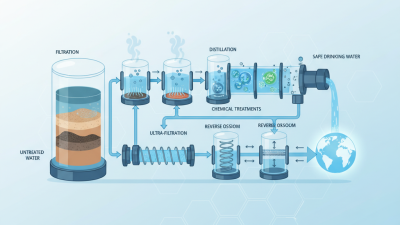
Distillation separates many contaminants, yet it consumes heat and time. A multi-stage system may combine sediment filtration, carbon, membranes, and disinfection. The U.S. EPA’s 2023 Drinking Water Infrastructure Needs Survey estimated 625 billion dollars in U.S. drinking-water infrastructure needs over 20 years. That scale shows why operating cost matters, not only removal percentage. Compare verified performance data, flow rate, energy use, wastewater, and service intervals. I would not choose the most advanced option automatically. A simpler system may perform better when filters are changed on schedule. That is the uncomfortable part: reliability often defeats impressive specifications.
Evaluate Safety, Performance, and Treatment Capacity
Choosing a water purification solution requires more than checking its price or appearance. Safety comes first. The WHO Guidelines for Drinking-water Quality identify microbial contamination as the greatest immediate risk to public health. The WHO and UNICEF Joint Monitoring Programme reported that 2.2 billion people lacked safely managed drinking water in 2022. Therefore, test the source water before selecting equipment. Check bacteria, turbidity, arsenic, nitrate, lead, and chemical residues where relevant.
Performance should be measured under real operating conditions. Review verified removal claims, flow rate, pressure limits, energy use, and maintenance intervals. A system rated for 1,000 litres daily may perform poorly when the inlet water is muddy or unusually salty. Treatment capacity also needs honest calculation. Estimate daily demand, seasonal changes, storage volume, and peak use. The United Nations World Water Development Report 2024 highlights growing pressure on freshwater resources, so wasted water and replacement parts matter. I have seen specifications look impressive until filter life falls sharply in difficult source water.
Tips: Request independent test reports, not only laboratory brochures. Compare treated-water quality with local standards. Keep a simple maintenance log. Leave safety margins. A small pilot test can reveal problems that a sales sheet cannot. Do not ignore taste changes, pressure drops, or unusual odours; they may indicate exhausted media or changing source conditions. WHO guidance also supports regular monitoring, yet many users test only once. That is a weakness worth correcting.
Assess Installation, Maintenance, and Operating Costs
Choosing a water purification system starts with the full cost of ownership, not the purchase price. The WHO and UNICEF Joint Monitoring Programme reported that 2.2 billion people lacked safely managed drinking water in 2022. That gap makes reliability essential, but reliability is rarely cheap.
Installation costs include pipe modifications, electrical upgrades, drainage, testing, and operator training. A compact unit may fit beneath a counter, while a larger treatment train may need reinforced flooring and ventilation. Ask for a five-year cost model. Include membranes, cartridges, chemicals, labor, wastewater disposal, and replacement parts. The U.S. Environmental Protection Agency identifies energy as a major expense in water and wastewater operations. Reverse osmosis can also discharge reject water, which affects both utility bills and environmental planning.
Operating data should be measured on site. Track energy use per cubic meter, recovery rate, cleaning frequency, and unplanned downtime. The International Energy Agency has reported that the energy demand of the water sector could more than double by 2040 without efficiency improvements. A system with lower energy demand may still lose financially if its filters require frequent replacement. That mistake is common. It is also easy to underestimate skilled maintenance.
Request service records, verified performance data, and realistic spare-part lead times. Do not trust laboratory results alone. Water chemistry changes by season, and a solution selected in winter may perform differently in summer. A pilot test is often worth the extra expense, although budget pressure may make it uncomfortable.
How to Choose the Best Solutions for Water Purification? - Assess Installation, Maintenance, and Operating Costs
| Purification Solution |
Best Application |
Typical Contaminants Addressed |
Typical Installation Cost
(USD) |
Annual Maintenance
(USD) |
Annual Operating Cost
(USD) |
Estimated 5-Year Cost
(USD) |
Key Limitations |
| Activated Carbon Filtration |
Point-of-use drinking water or whole-house prefiltration |
Chlorine, taste, odor, sediment, and some organic chemicals |
$300–$900 |
$120–$300 |
$10–$40 |
$1,250–$2,600 |
Does not reliably remove dissolved salts, nitrate, fluoride, or microorganisms unless specifically certified for them. |
| Ultraviolet Disinfection |
Private wells or water supplies with microbial contamination risk |
Bacteria, viruses, and other microorganisms |
$700–$1,800 |
$100–$250 |
$25–$80 |
$1,325–$3,450 |
Does not remove chemicals, metals, or sediment; water must be reasonably clear for effective treatment. |
| Reverse Osmosis |
Point-of-use drinking and cooking water |
Many dissolved salts, lead, arsenic, fluoride, nitrate, and selected chemicals |
$250–$1,000 |
$60–$200 |
$20–$60 |
$900–$2,300 |
Produces wastewater and usually needs prefilters; contaminant removal depends on membrane certification and water chemistry. |
| Ultrafiltration |
Whole-house or point-of-use treatment where particulate and microbial reduction is needed |
Suspended solids, bacteria, cysts, and some viruses |
$800–$2,500 |
$100–$300 |
$20–$70 |
$1,400–$4,350 |
Usually does not reduce dissolved salts, hardness, nitrate, or many dissolved chemicals. |
| Distillation |
Small-volume, high-purity drinking water production |
Dissolved minerals, many metals, salts, and microorganisms |
$300–$1,200 |
$50–$150 |
$100–$300 |
$1,050–$3,450 |
Higher energy use, slower production, and unsuitable for most whole-house applications. |
| Ion-Exchange Water Softening |
Whole-house reduction of hardness and scale |
Calcium and magnesium hardness; some systems reduce iron or manganese |
$800–$2,500 |
$100–$300 |
$60–$180 |
$1,600–$4,900 |
It is a water-treatment solution rather than a general purifier and does not remove most pathogens or dissolved contaminants. |
|
Cost basis: Indicative residential ranges in U.S. dollars for typical household installations. Five-year cost includes installation plus five years of maintenance and operating expenses, but excludes major plumbing upgrades, laboratory testing, financing, and unusual pretreatment requirements. Actual costs vary by water quality, flow rate, household size, local labor rates, electricity prices, and replacement frequency. Test the source water before selecting a system.
|
Select a Solution That Fits Your Household or Facility
Choosing water purification starts with the people and processes using the water. A small household may need protection from sediment, chlorine taste, or hardness. A clinic, workshop, or school faces different risks, volumes, and maintenance demands. I recommend testing incoming water before comparing equipment. A recent laboratory report is more useful than a dramatic sales claim. Note seasonal changes too. Well water can shift after heavy rain, while municipal water may vary during repairs.
For a home, calculate daily use, peak demand, and available installation space. A unit treating one tap may not suit a busy family. Check replacement intervals, wastewater production, noise, and access to service parts. Ask who will maintain it. If nobody can change filters safely, the design is already a poor fit. I have seen households choose high-capacity systems, then neglect maintenance because operating costs were unclear.
Facilities need a written water-quality plan, staff training, and maintenance records. Match treatment stages to measured contaminants, not general fears. Disinfection, filtration, softening, and membrane systems solve different problems. Confirm independent performance documentation and compliance with applicable local requirements. Leave room for monitoring. A sensor can warn about pressure or flow, but it cannot replace laboratory verification. My recommendation would change if the source, budget, or users changed. That limitation matters.