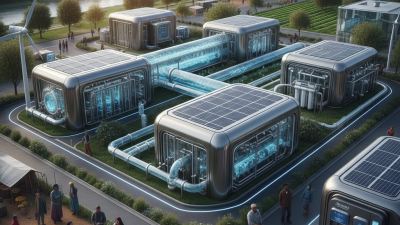
China Best Purification Systems Suppliers for Global Buyers

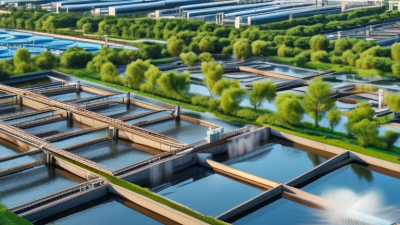
China has become a major sourcing destination for purification systems, serving factories, laboratories, hospitals, hotels, and municipal projects worldwide. Its suppliers offer reverse osmosis units, ultrafiltration equipment, UV disinfection, air filtration, and integrated water treatment lines. However, product variety can create confusion. A polished catalogue does not prove field performance.

Water-treatment expert Dr. Joseph G. Jacangelo is often associated with a practical principle: “Treatment must be matched to the contaminant, not chosen by reputation.” That idea should guide every international purchase. Buyers need verified removal data, flow-rate evidence, membrane specifications, energy-use records, and clear maintenance procedures. Factory audits also matter. Look for documented quality controls, trained technicians, traceable components, and responsive after-sales support.

Strong suppliers explain limits clearly. They do not promise that one machine solves every water problem. That honesty is valuable. A system designed for iron removal may not control bacteria, pesticides, or dissolved salts. Site testing should come before final configuration. Feed-water temperature, pressure, turbidity, and seasonal changes can alter results.

This guide examines China’s best purification systems suppliers for global buyers. It focuses on technical capability, customization, certifications, production experience, and export reliability. It also considers weaknesses, because no supplier is perfect. Some companies communicate well but provide limited service overseas. Others offer impressive engineering yet lack transparent performance records. Careful comparison remains essential. The right partner delivers more than equipment. It delivers measurable treatment results, practical training, and support after installation.
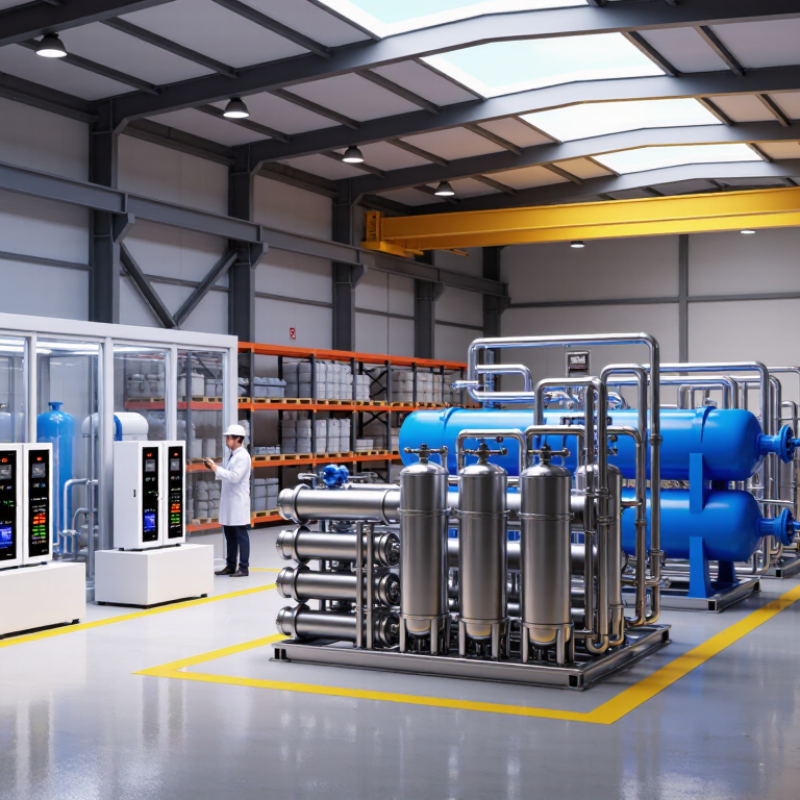
China Best Purification Systems Suppliers for Global Buyers

Types of Purification Systems Supplied by Chinese Manufacturers

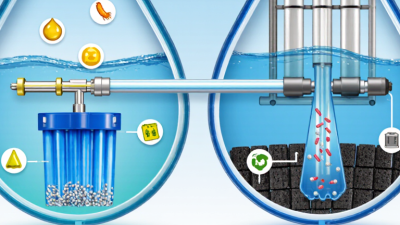
Chinese manufacturers supply diverse purification systems for global buyers. Reverse osmosis systems remove dissolved salts, heavy metals, and many organic contaminants. Ultrafiltration systems retain suspended solids, bacteria, and larger particles. They are useful for pretreatment and drinking water applications.

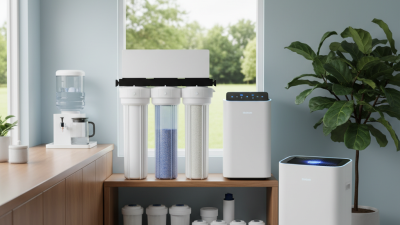
Ultraviolet systems provide chemical-free microbial control after filtration. Activated carbon units reduce chlorine, odors, and certain organic compounds. For high-purity water, electrodeionization systems can follow reverse osmosis. Industrial buyers may also request multimedia filters, softeners, or wastewater treatment units. Each system should match the source water, flow rate, and required purity.

Reliable suppliers normally provide water analysis, process drawings, factory testing, and operating instructions. Buyers should verify material grades, membrane performance, electrical standards, and after-sales support. Factory experience matters, but written specifications matter more. Some projects fail because maintenance space was ignored. That detail is easy to miss.

Tips: Request a sample water test before selecting equipment. Ask for performance data under realistic temperatures and flow conditions. Check replacement intervals for membranes, lamps, filters, and resin. Do not choose the lowest quotation automatically. A cheaper system may consume more water or require frequent service. Also, leave room for future capacity. Demand often grows faster than expected.

Key Industries Served by China’s Purification Equipment Suppliers

China’s purification equipment suppliers serve demanding industries with different standards and operating conditions. Pharmaceutical manufacturers often require purified water, water-for-injection systems, and cleanroom air control. Food and beverage plants use filtration, ultraviolet treatment, and hygienic process piping. Electronics factories need low-particle water for wafer cleaning and precision production.

Hospitals, laboratories, and municipal facilities also purchase reverse osmosis, ultrafiltration, and wastewater treatment systems. Experienced suppliers usually support process design, equipment testing, installation guidance, and maintenance training. Buyers should review material certificates, flow rates, energy use, and validation documents before choosing a system. Specifications may look strong on paper, yet local water quality can expose unexpected weaknesses. That reality deserves careful attention.

Tips: Ask for a pilot test when feedwater changes seasonally. Request clear drawings, spare-parts lists, and response times. Check whether the supplier can adapt voltage, language, documentation, and safety requirements for your country. A practical factory visit can reveal workmanship, testing procedures, and after-sales readiness. No system is perfect. Good suppliers admit limitations and explain how they will manage them.

Quality Standards and Technologies Used in Chinese Purification Systems

Chinese purification system suppliers increasingly serve global buyers in water, air, laboratory, and industrial applications. Reliable projects begin with measurable quality standards, not attractive brochures. Many factories operate under ISO 9001 quality management systems and use documented inspection procedures. Applicable products may also follow Chinese GB standards, ISO requirements, or CE-related rules for specific markets. Compliance depends on the equipment and destination country.

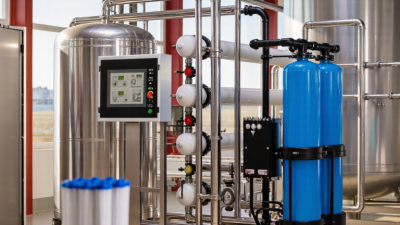
Common technologies include reverse osmosis, ultrafiltration, activated carbon filtration, ultraviolet treatment, ozone, and precision cartridge filters. A typical water system may combine a sand filter, carbon vessel, RO membrane, and UV chamber. Sensors monitor conductivity, pressure, flow, and temperature. PLC controls can record alarms and operating data. Stainless steel piping, sanitary welding, and cleanable components support demanding environments. The details matter.

Experienced buyers should request material certificates, factory test reports, calibration records, and maintenance instructions. Factory acceptance testing can check flow rate, leakage, electrical safety, and treated-water quality before shipment. Site acceptance testing confirms performance after installation. Supplier audits are useful, but they are not perfect. A polished facility can still miss small documentation gaps. One overlooked sensor may affect an entire process. Clear specifications, sample testing, spare parts planning, and operator training make the system more dependable. Local water conditions should guide final design decisions.

China Best Purification Systems Suppliers for Global Buyers - Quality Standards and Technologies Used in Chinese Purification Systems

Technical values are typical reference ranges; final specifications depend on feed-water quality, local regulations, system configuration, and validation testing.
Category Standard or Technology Primary Function Typical Operating Data Common Applications Global Buyer Considerations
Quality Management ISO 9001:2015 Establishes a quality-management framework covering documented processes, customer requirements, corrective actions, and continual improvement. Applies to the organization’s quality-management system rather than to a specific purification performance value. Equipment design, assembly, testing, procurement, and after-sales service. Verify certificate scope, validity, certification body, and whether the certificate covers the manufacturing site involved in the project.
Environmental Management ISO 14001:2015 Provides a framework for managing environmental impacts, resource use, waste, and compliance obligations. Organization-level environmental controls; it does not certify that treated water meets a particular drinking-water standard. Manufacturing operations, chemical handling, wastewater management, and energy planning. Request current certification records and environmental documentation for the actual production facility.
Electrical and Machinery Safety CE-related conformity for applicable EU requirements Supports conformity assessment for applicable product-safety, electromagnetic-compatibility, and machinery requirements. Requirements vary according to equipment design, voltage, controls, pressure, and intended market. Packaged skids, control cabinets, pumps, UV units, ozone systems, and automated plants. Confirm the applicable EU directives or regulations, technical file, declaration of conformity, and test documentation; a logo alone is not sufficient evidence.
Particle Removal Multimedia and cartridge filtration Reduces suspended solids and protects downstream membranes and disinfection equipment. Cartridge ratings commonly range from approximately 1 to 50 micrometres; actual removal depends on media, loading, and filter design. Pretreatment for municipal water, industrial process water, and membrane systems. Check design flow, pressure drop, backwash method, media depth, replacement intervals, and the stated test method for micron ratings.
Organic and Chlorine Control Activated carbon adsorption Adsorbs many organic compounds and can remove chlorine and odor that may damage polyamide reverse-osmosis membranes. Performance depends on empty-bed contact time, carbon type, contaminant concentration, temperature, and breakthrough behavior. Drinking-water pretreatment, food processing, and industrial water polishing. Request carbon specification, iodine number or equivalent data, contact-time calculation, backwashing requirements, and change-out criteria.
Membrane Separation Ultrafiltration (UF) Removes suspended solids, colloids, bacteria, and many high-molecular-weight substances by membrane separation. Typical nominal pore-size or molecular-weight-cutoff specifications vary by membrane; operating pressure is generally much lower than reverse osmosis. Surface-water clarification, pretreatment, drinking-water production, and wastewater reuse. Evaluate integrity testing, backwash and chemically enhanced cleaning programs, flux design, and validated microbial-removal claims.
Dissolved-Salt Reduction Reverse osmosis (RO) Uses a semipermeable membrane and pressure to reduce dissolved salts, many dissolved organics, microorganisms, and particulates. Typical recovery is often about 50–85% depending on feed water and system design; salt rejection is commonly specified above 95% for many systems, subject to membrane type and conditions. Desalination, boiler-feed water, process water, and potable-water treatment. Compare recovery, concentrate disposal, pretreatment, membrane-flux design, energy use, and guaranteed permeate conductivity under defined feed conditions.
High-Purity Water Electrodeionization (EDI) Continuously removes ionized impurities using ion-exchange media, membranes, and an electric field, normally after RO pretreatment. Feed-water limits and product-water resistivity depend on module design; many systems target ultrapure or high-purity water after suitable pretreatment. Laboratories, electronics, pharmaceutical utilities, and high-pressure boiler systems. Check feed-water hardness, silica, carbon dioxide, chlorine, conductivity, pretreatment quality, and continuous product-water monitoring.
Microbial Inactivation Ultraviolet (UV) disinfection Inactivates microorganisms by exposing water to germicidal ultraviolet light without adding a chemical residual. Common system design targets include a validated UV dose; dose delivery is affected by UV transmittance, flow, lamp age, and fouling. Drinking water, process-water polishing, and wastewater reuse. Request validated dose data, UV-transmittance assumptions, sensor calibration procedures, alarm logic, and quartz-sleeve cleaning provisions.
Oxidation and Disinfection Ozone treatment Oxidizes certain organic and inorganic compounds and can provide disinfection, depending on ozone dose, contact time, and water chemistry. Requires controlled ozone generation, mixing, contact, off-gas destruction, and monitoring; bromate formation must be considered where bromide is present. Drinking-water treatment, industrial reuse, color and odor control, and advanced oxidation processes. Assess ozone-generation capacity, oxygen supply, contact-tank design, off-gas safety, residual ozone control, and by-product management.
Biological Treatment Membrane bioreactor (MBR) Combines biological wastewater treatment with membrane separation to retain biomass and produce clarified effluent. Typical operating conditions vary with wastewater; membrane fouling control, sludge characteristics, aeration, and cleaning determine sustainable flux. Municipal wastewater, industrial wastewater, and water-reuse projects. Compare biological-load assumptions, membrane type, air-scour energy, sludge handling, cleaning chemicals, and guaranteed effluent limits.
Factory Acceptance FAT and performance verification Confirms assembly quality, instrumentation, control logic, alarms, leak tightness, and agreed performance before shipment. Test conditions should define flow, pressure, temperature, feed-water chemistry, product-water limits, electrical load, and acceptance tolerances. Packaged purification skids and containerized treatment plants. Include FAT procedures, calibration certificates, inspection records, punch lists, spare-parts lists, and document handover requirements in the contract.

How Global Buyers Can Evaluate Chinese Purification System Suppliers

Global buyers should evaluate Chinese purification system suppliers through verified performance, not attractive quotations. The WHO and UNICEF Joint Monitoring Programme reported that 2.2 billion people lacked safely managed drinking water in 2022. This demand makes supplier selection a technical decision. Request process-flow diagrams, water analysis, material certificates, and documented rejection rates. Check whether the system matches your feedwater, capacity, climate, and local discharge rules.

Factory experience matters. Ask for recent project references with comparable hardness, salinity, or microbial conditions. Review factory acceptance testing procedures, calibration records, and component traceability. ISO’s 2022 Survey recorded more than 1.26 million ISO 9001 certificates worldwide, but certification alone does not prove purification quality. Inspect production controls personally when possible. A clean workshop helps, but it cannot replace test evidence.

Run a pilot test.

Use your own water samples. Measure recovery, conductivity, pressure, flow stability, and chemical consumption over several days. Require clear warranty terms, spare-parts lists, training, and remote-support response times. Confirm compliance with applicable standards through independent laboratory reports, not copied certificates. Some suppliers may provide impressive data from ideal conditions. That is a weakness worth challenging. A stronger evaluation records deviations, maintenance delays, and failed tests before signing a long-term contract.

Export Services, Customization, and After-Sales Support for International Buyers

For global buyers, a purification system is only as reliable as its export support. The WHO/UNICEF Joint Monitoring Programme reported that 2.2 billion people lacked safely managed drinking water in 2022. This gap increases demand for dependable treatment equipment and practical supplier guidance. Experienced Chinese suppliers should provide water analysis, process drawings, and clear performance targets before production. They should also prepare export documents, certificates, installation manuals, and spare-parts lists. Details matter. A small voltage mismatch can delay commissioning at a remote site.

Customization should reflect source water, climate, local standards, and operating skills. The 2024 UNESCO World Water Development Report states that agriculture represents about 70% of global freshwater withdrawals. Buyers serving farms or industrial zones may need lower-water cleaning cycles and stronger pretreatment. Factory acceptance testing can verify flow rate, pressure, recovery, and contaminant reduction before shipment. Remote video inspection adds useful evidence, although it cannot replace every on-site check. This is where suppliers must remain honest. A standard design may look efficient but fail under seasonal water changes.

After-sales service should include multilingual technical support, troubleshooting videos, maintenance schedules, and fast access to consumables. Regional service partners can reduce downtime, but their response promises should be written clearly. International buyers should request training records and measurable warranty terms. No supplier gets every project right. Continuous feedback, failure analysis, and periodic water testing keep the system dependable after installation.

Skip to content